
Motor Mount Replacement Cost: What They Do and How Much You’ll Pay
Let’s talk about motor mounts. These are one of those components that basically nobody thinks about until something goes wrong—and when they do go wrong, it’s immediately obvious and kind of alarming. If you’re reading this, maybe you’ve got a vibrating engine bay, clunking noises, or someone just told you your motor mounts are shot and you’re trying to figure out if that’s really the problem.
Let’s get into what motor mounts actually do, how to know if they’re bad, and—probably the part you’re most curious about—what this repair is going to cost you.
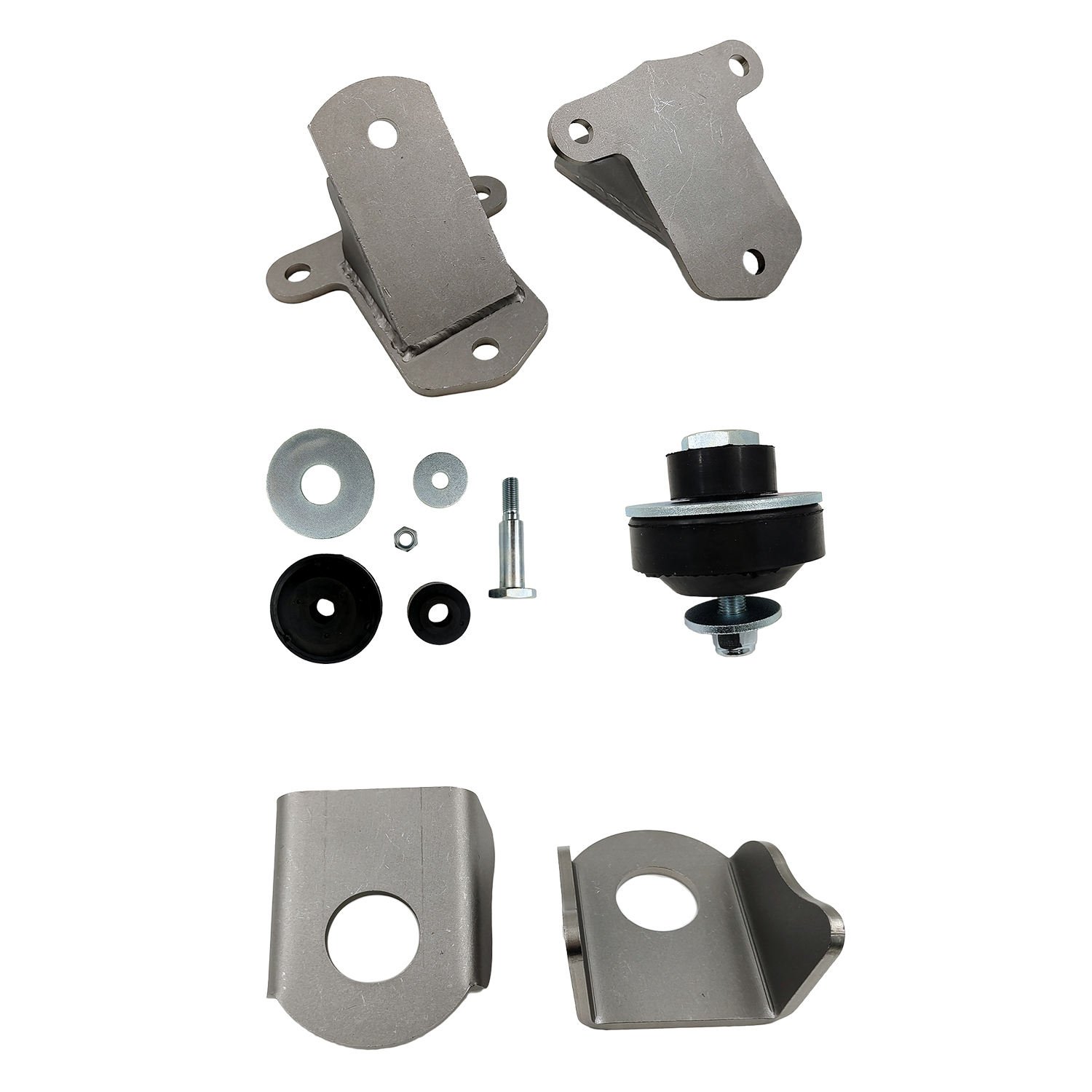
What Does a Motor Mount Actually Do?
A motor mount is the rubber or hydraulic mounting that holds your engine to the vehicle frame or subframe. Every vehicle has at least two—some have three or four. They bear the weight of the engine (which is several hundred pounds) and keep it properly positioned in the engine bay.
The mount does three main jobs:
Supports engine weight. The engine sits in the mounts, which transfer the load to the body. Without mounts, the engine would rest directly on the frame, transmitting vibration and noise directly into the cabin.
Absorbs vibration. This is the key one. Your engine vibrates during operation—from the internal combustion process, from accessories cycling on and off, from imbalances in rotating parts. The mount’s rubber or hydraulic core absorbs that vibration before it travels into the car. That’s why your engine feels smooth instead of rattling your teeth.
Controls engine movement. When you accelerate, the engine twists backward (torque reaction). When you brake hard, it lunges forward. When you corner hard, it rolls. The mounts allow controlled movement in those directions while keeping the engine in place for everything else. They’re designed to flex under load while returning to center.
Without functioning mounts, your engine would be bouncing around the engine bay, hammering mount brackets, destroying other components, and making your car feel like it’s about to fall apart.
What Are Motor Mounts Made Of?
Not all mounts are created equal. Here’s what you’re dealing with:
| Mount Type | How It Works | Pros | Cons | Common Use |
|---|---|---|---|---|
| Solid rubber | Molded rubber between metal plates | Simple, durable, cheap | Transfers more vibration | Economy cars, OEM |
| Hydraulic | Rubber with fluid-filled cavity | Best vibration isolation | More expensive, can leak | Most modern cars |
| Active electronic | Computer-controlled hydraulic | Adjustable, smooth ride | Very expensive, complex | Luxury/performance cars |
| Polyurethane | Hard plastic bushing | Long lasting, responsive | Transfers more vibration | Performance builds |
| Solid (metal only) | Metal bushing or bushing | No compliance at all | Harsh ride, damages components | Dedicated race cars only |
Most factory vehicles use hydraulic mounts—they offer the best balance of vibration isolation, cost, and durability. Aftermarket upgrades often use solid rubber or polyurethane for performance applications where you want less engine movement and more direct feel.
How Do You Know If Your Motor Mounts Are Bad?
Here’s where it gets practical. Here are the actual symptoms of failing motor mounts:
Engine movement you can see. With the engine running and your foot on the brake, put the car in drive. If you can visibly see the engine rocking significantly—more than a half inch or so—that’s a bad mount. In park or neutral, you shouldn’t see much movement at all.
Clunking or banging noises. Especially noticeable when you take off from a stop, hit a bump, or put the transmission in gear. The noise is usually a dull thud from the engine bay. If your car sounds like it’s being beaten with a hammer when you accelerate, check the mounts.
Excessive vibration. Especially at idle or low RPM. A failing mount lets more engine vibration through to the cabin. If your normally smooth-running car suddenly feels rough at idle, inspect the mounts.
Engine sitting at an angle. Pop the hood and look at the engine. If it’s visibly lower on one side than it should be, or if it looks like it’s shifted position, a mount has probably completely failed.
Cracked or missing mount bushings. If you can see the mount (some are visible from below), check the rubber. If it’s cracked, split, or missing entirely, the mount is shot. Also look for signs of oil or fluid soaking the mount—if it has a fluid-filled center, a leak means it’s bad.
Motor Mount Replacement Cost: The Numbers You Actually Want
Here’s what you’re probably most curious about. Motor mount costs vary by vehicle, but here’s the real-world breakdown:
Parts Cost
| Vehicle Type | Aftermarket Parts | OEM Parts |
|---|---|---|
| Economy cars (Honda Civic, Toyota Corolla) | $50-150 per mount | $150-350 per mount |
| Mid-size cars (Camry, Accord, Mazda3) | $80-200 per mount | $200-450 per mount |
| Sports cars (Mustang, Camaro, 370Z) | $100-250 per mount | $300-600 per mount |
| Trucks/SUVs | $100-300 per mount | $300-700 per mount |
| Luxury vehicles (BMW, Mercedes, Audi) | $150-400 per mount | $400-1000+ per mount |
Most cars have 3-4 motor mounts. You’re usually replacing all of them if one’s bad, because mounts typically fail around the same age.
Labor Cost
| Number of Mounts | Typical Labor Time | Labor Cost Range |
|---|---|---|
| Single mount | 1-2 hours | $100-250 |
| Two mounts | 1.5-3 hours | $150-350 |
| Full set (3-4 mounts) | 2-4 hours | $200-500 |
Labor rates vary by region and shop. Expect to pay more for luxury vehicles and less for common economy cars where mechanics have done this job many times.
Total Cost Examples
| Vehicle | Aftermarket (full set) | OEM (full set) |
|---|---|---|
| Honda Civic | $300-600 | $600-1200 |
| Toyota Camry | $400-800 | $800-1600 |
| Ford Mustang | $500-900 | $1000-2000 |
| Chevy Silverado | $500-1000 | $1200-2500 |
| BMW 3-Series | $800-1500 | $2000-4000+ |
These are estimates. Call shops in your area for specific quotes on your vehicle.
Aftermarket vs. OEM Motor Mounts
My take on this one:
For most people, quality aftermarket is fine. Brands like Moog, Dorman, Febest, AC Delco, and others make motor mounts that perform as well or better than OEM. The rubber compounds and hydraulic fluid are similar. Save the OEM money for other maintenance.
For performance builds, consider upgraded mounts. If you’re building a performance car or doing a swap that adds more power, polyurethane or solid rubber mounts reduce engine movement and improve power transfer to the chassis. Worth the investment if you’re chasing performance.
For luxury or specialty vehicles, OEM might be worth it. Some vehicles have complex mount designs with electronic adjustment or very specific rubber compounds. For those, OEM or OEM-equivalent is safer.
Avoid the cheapest parts. Motor mounts that cost $20-30 for a set are usually garbage. The rubber degrades fast, and you’ll be doing this job again in a year. Budget for quality parts—you get what you pay for.
Can You Replace Motor Mounts Yourself?
If you’re mechanically inclined and have the right tools, yes. Here’s what’s involved:
The tricky parts: supporting the engine safely, reaching all the bolts (some are buried deep), and getting proper torque on bolts in awkward positions. If you’re not comfortable with this, it’s a reasonable shop job.
Performance Motor Mounts: Are They Worth It?
This comes up a lot, especially for people doing swaps or performance builds. Here’s the breakdown:
| Mount Type | Best For | Trade-off |
|---|---|---|
| Stock hydraulic | Daily driving, comfort | Allows more engine movement |
| Solid rubber | Budget upgrade, street performance | Transfers more vibration, firmer feel |
| Polyurethane | Performance builds, street/strip | Firm, moderate vibration transfer |
| Solid metal | Track-only race cars | Harsh ride, damages components without isolation |
For a street-driven car that sees occasional track days, polyurethane is the sweet spot. For a dedicated race car, solid mounts make sense. For a daily driver, stock mounts are fine unless they’re failing.
Common Mistakes That Cause Problems
Not supporting the engine properly. This is how you damage other things while replacing mounts. Take this seriously—use jack stands, not just a jack.
Replacing just one mount. If one is bad, the others are close behind. Do them all at once—you’re already in the area, and the labor cost is mostly the same.
Overtightening bolts. Motor mount bolts need proper torque, but over-tightening can crush the mount bushings and ruin them immediately. Follow the spec.
Forgetting to check for hydraulic fluid. If your mounts are hydraulic and leaking, the fluid is probably transmission or power steering fluid depending on design. Clean up any spilled fluid before starting the car—it’s slippery.
FAQ
Q: Can I drive my car with bad motor mounts?
A: Technically yes, but it’s not ideal. Bad mounts let the engine move excessively, which can stress other components like the transmission, exhaust, and drive shafts. If the mount is completely collapsed, the engine can contact the frame or body, causing noise and potential damage. Get them fixed before they cause bigger problems.
Q: How long do motor mounts last?
A: Typically 80,000-120,000 miles for the rubber in factory hydraulic mounts. Aggressive driving, exposure to road salt, and heavy loads can shorten that. Once they start showing symptoms, they’re not getting better—only worse.
Q: Should I upgrade to polyurethane mounts?
A: If you’re building a performance car or doing a swap that increased power, yes. For a stock vehicle used as a daily driver, stock mounts are fine. Polyurethane transfers more vibration into the cabin, so be prepared for that if you upgrade.
Q: Do I need an alignment after replacing motor mounts?
A: Usually not for front and rear mounts. But if your vehicle has motor mount positions that also set alignment geometry (some do), then yes—you’ll need an alignment check afterward.
Q: How many motor mounts does my car have?
A: Most FWD cars have 3 motor mounts (two sides and one back). Most RWD cars have 4 motor mounts (two front, two side or rear). Check your service manual or look up your specific vehicle.
Q: Is motor mount replacement covered under warranty?
A: If you have a factory warranty and the failure is due to manufacturing defect, yes. Normal wear is not covered. If you’re buying used, check the vehicle history and budget for mount replacement as a potential maintenance item if the car is over 80,000 miles.
Where to Buy a Where to Buy a Ford Steel Motor Mounts Kit?
If you’re looking for a reliable supplier, it’s important to choose a manufacturer that offers:
- Stable product quality
- Consistent supply
- Wholesale support
- OEM branding options
For bulk orders or reseller inquiries, you can check this product page:
If you’re looking for a reliable supplier, it’s important to choose a manufacturer that offers:
- Stable product quality
- Consistent supply
- Wholesale support
- OEM branding options
For bulk orders or reseller inquiries, you can check this product page: