
Cam Button SBC: The Tiny Part That Keeps Your Small Block Chevy From Having a Bad Day
So there you are, elbow-deep in your small block Chevy timing cover job, and you spot this little button thing sitting on the front of the camshaft. Maybe you pull it out and wonder what the hell it’s for. Maybe you’re ordering parts and see “cam button” on the list and think “do I actually need one of those?”
Yeah, you do. And here’s why.
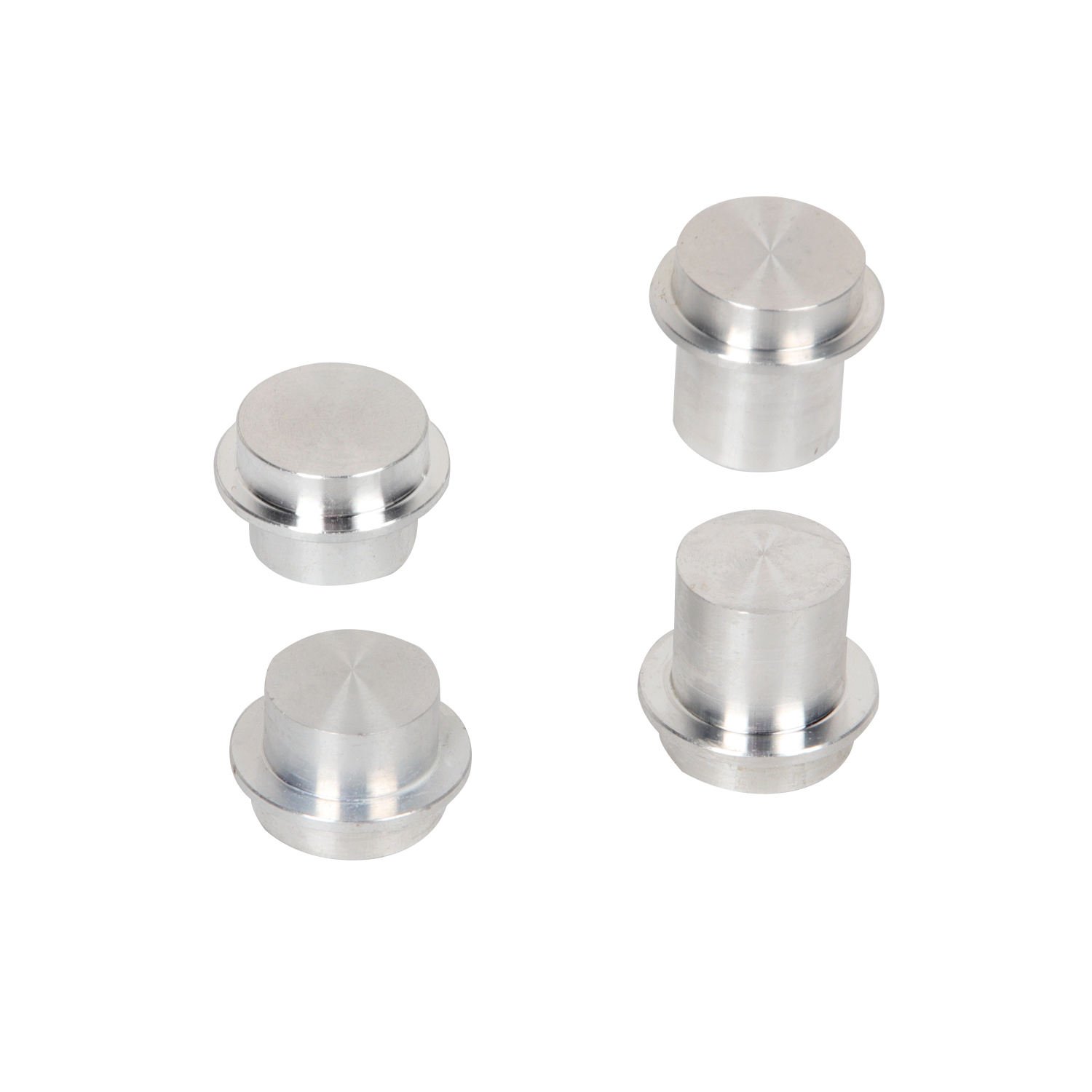
The World’s Smallest Thrust Bearing
Picture this: your camshaft is spinning away in there, driving the valves, opening and closing a thousand times a minute. The timing chain is pulling on the cam gear with constant pressure. That pressure wants to push the whole camshaft forward, out of the block, like toothpaste being squeezed from a tube.
The cam button is what says “nope, you’re staying right here.”
It’s basically a tiny thrust bearing—usually just a small disc of plastic, steel, or aluminum that sits between the cam’s thrust face and the timing cover. When the chain pushes forward, the cam button catches it. Simple concept, huge importance.
Without one, your camshaft would walk itself out of the block over time. And when that happens, your timing chain jumps, your valve timing goes sideways, and your engine makes a sound like it’s trying to digest itself. Not ideal.
Why Would You Even Touch This Thing?
Here’s the thing about cam buttons—you don’t usually think about them until something forces you to. A few scenarios:
Fresh engine build. Building a new small block? You’re going to install a cam button as part of the assembly process. It’s just part of putting an engine together right.
Timing chain job. Pulling that timing cover off means dealing with everything in there, including the cam button. Sometimes it’s fine. Sometimes it’s worn out. Worth checking while you’re in there.
Camshaft swap. Different cams have different thrust requirements. Your old button might not work with your new cam.
Button’s just worn out. After 100k miles, these things wear down. Especially the plastic ones that came from the factory. They get thin, they get grooved, they stop doing their job properly.
The good news? Cam buttons are cheap. Like, really cheap. No excuse not to replace one when you’re in there.
The Button Hierarchy
Not all cam buttons are created equal. Here’s the rundown:
Factory plastic. Your grandpa’s SBC had one of these. Nylon or some kind of composite. It works, but under performance loads, it wears faster than you’d like. Great for stock builds, questionable for anything with serious RPM intentions.
Steel buttons. Now we’re talking. Steel handles thrust loads way better than plastic. You see these in most performance builds. They cost a few bucks more, but they actually last.
Aluminum buttons. Middle ground. Aluminum dissipates heat well and handles thrust, but it can wear against steel cam thrust faces if things get starved for oil. Fine for most street applications, probably not ideal for dedicated race engines.
High-tech composites. Some of the performance button manufacturers make reinforced polymer buttons designed for high thrust loads. Self-lubricating, heat-resistant, all that good stuff. Worth it if you’re building something that spins big numbers.
For most street motors, steel is the sweet spot. Cheap enough, durable enough, done.
The Installation Situation
Here’s where people get tripped up: cam button installation isn’t complicated, but there are right ways and wrong ways to do it.
The button seats in a recess—either in the timing cover itself or a boss on the block, depending on your specific SBC design. It’s usually a press-fit situation. The button goes in that recess, the cam pushes against it, everything stays where it should.
What can go wrong:
- Button seated crooked. Now your cam endplay is messed up and things wear faster.
- Debris under the button. That little piece of gasket or dirt prevents proper seating. Clean everything.
- Wrong thickness button. Thickness sets your endplay. Too thick = preloaded thrust bearing = cam wear. Too thin = excessive endplay = chain noise.
- Button installed backwards. Some designs are directional. Read the instructions.
The last one gets people. “What do you mean it matters which way this thing faces?” Yeah, some buttons only work in one orientation. Check before you smash it in.
That Endplay Thing
Speaking of endplay—let’s talk about what “correct” actually means for a small block Chevy camshaft.
Camshaft endplay should be somewhere around 0.001″ to 0.005″. Tiny. You’ll need a dial indicator to measure it properly. Push the cam forward until it contacts the button, zero your indicator, then pull it back and read the movement.
If your endplay is within range, the button thickness is correct.
If it’s zero (cam won’t move back at all), your button is too thick. This preloads the thrust bearing and accelerates wear.
If it’s more than 0.010″ or so, button’s too thin, or it’s not seating properly.
Most of the time, the factory button thickness is correct for your application. If you’re swapping cams, check—different grinds have different thrust loads, and your button might need to change.
A Quick Word on Cam Buttons vs. Thrust Washers
Some engines use thrust washers instead of buttons. Same concept, different form factor. The SBC typically uses buttons, but if you’re working on other platforms, don’t get confused. They’re solving the same problem—controlling camshaft thrust—just implemented differently.
When Things Go Wrong
What happens if your cam button fails? How do you know?
Timing chain noise. If your chain suddenly sounds like it’s rattling more than usual, especially at startup, your cam might be walking forward.
Loss of timing. The chain jumping teeth because the cam isn’t held in place properly.
Physical damage. In extreme cases, the cam can actually contact the timing cover, damaging both.
Most of the time, you catch it before total disaster. A little extra chain noise, a little more endplay than before. Symptoms develop gradually. That’s why, when you’re in there, just replace the button. It’s like $10 and you’re already halfway done with the job anyway.
FAQ
Q: Can I skip the cam button and just use washers?
A: Not really. The button is designed to distribute thrust load across a specific surface area. Random washers might not fit the recess properly and could cause other problems. Just use the right part.
Q: My button is plastic. Should I upgrade to steel?
A: If you’re building anything beyond a bone-stock cruiser, yes. Steel handles performance use better. The cost difference is minimal.
Q: Do all SBC engines use the same cam button?
A: Generally yes for the basic small block Chevy family, but there are variations. Check your specific application when ordering.
Q: Can I install a cam button without pulling the timing cover?
A: Depends on access. Some configurations let you reach the cam nose from the front without removing the cover. Most of the time, though, you’ll want the cover off for proper visibility and access.
Q: What happens if the cam button falls into the engine?
A: It shouldn’t, if it’s seated properly. But if one somehow got knocked into the block, you’d need to retrieve it before starting the engine—otherwise it becomes a very expensive piece of debris rattling around your bottom end.
Q: Is this a critical part?
A: Yeah, actually. It might be small, but it’s doing important work. Don’t skip it, don’t use the wrong one, and don’t install it wrong.
Where to Buy a Where to Buy a SBC Cam Button?
If you’re looking for a reliable supplier, it’s important to choose a manufacturer that offers:
- Stable product quality
- Consistent supply
- Wholesale support
- OEM branding options
For bulk orders or reseller inquiries, you can check this product page:
If you’re looking for a reliable supplier, it’s important to choose a manufacturer that offers:
- Stable product quality
- Consistent supply
- Wholesale support
- OEM branding options
For bulk orders or reseller inquiries, you can check this product page: