How to Check Engine Oil Dipstick?
The engine oil dipstick serves as the primary measurement interface for engine lubrication status monitoring. Unlike modern electronic oil level sensors found in some vehicles, the traditional dipstick provides direct visual confirmation of oil quantity and preliminary condition assessment.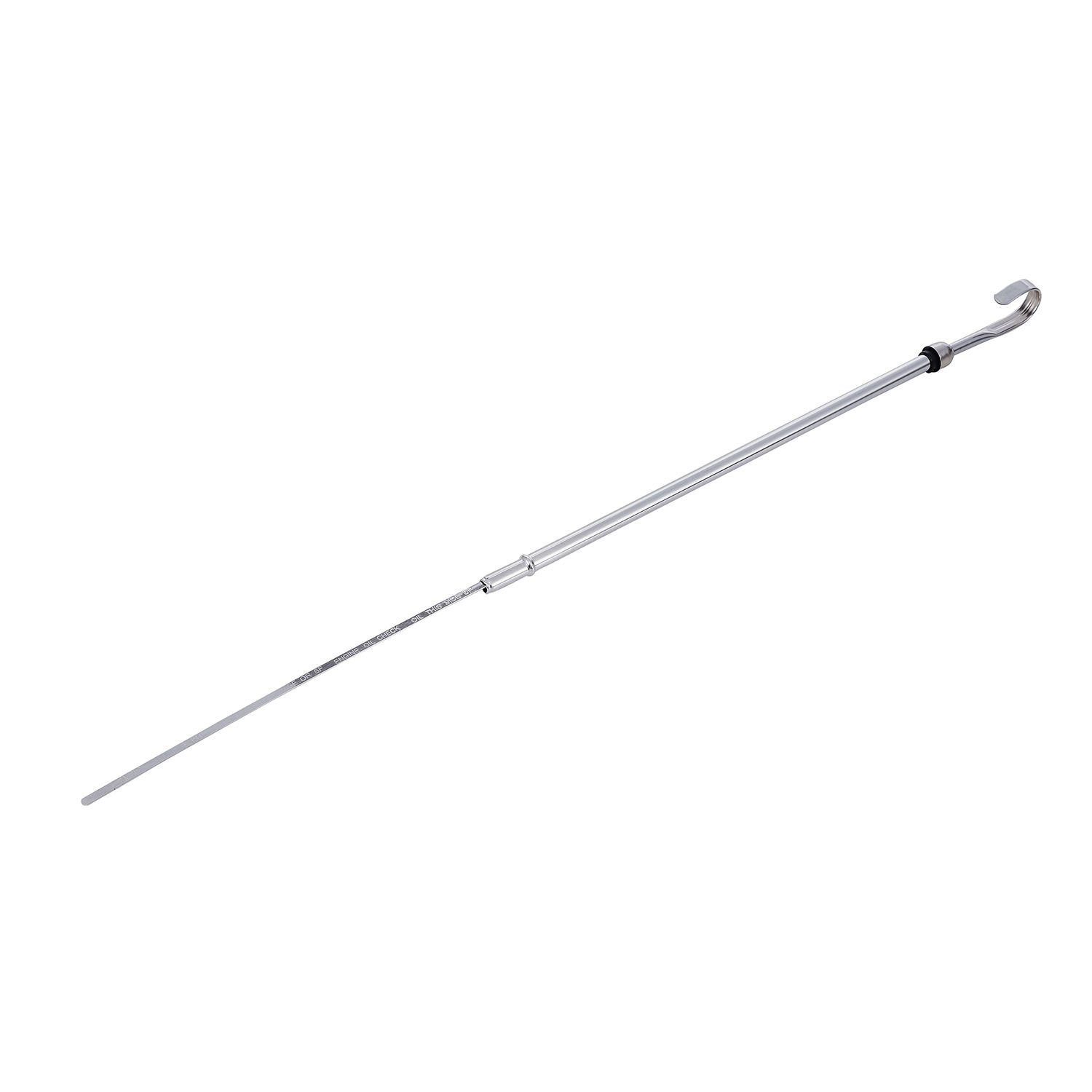
This technical guide establishes comprehensive methodology for accurate dipstick reading, ensuring proper engine lubrication maintenance and early detection of potential issues requiring attention.
Dipstick Design and Marking Systems
Standard Dipstick Architecture
| Component | Function | Visual Identification |
|---|---|---|
| Handle | Grip and extraction aid | Colored plastic or metal cap |
| Shaft | Immersion depth indicator | Metal rod with markings |
| tip | Oil contact point | Bottom end of shaft |
| Level markings | Quantity indication | Notches, holes, or crosshatch |
| MAX/FULL marking | Upper safe limit | Often labeled or crosshatched |
| MIN/ADD marking | Lower safe limit | Single line or notch |
Marking System Variations
Crosshatch system: Many manufacturers utilize a crosshatched zone between MIN and MAX markings. Oil level within this zone indicates optimal quantity. The zone accommodates thermal expansion variation during normal operation.
Notch system: Some dipsticks feature distinct notches representing level increments. Reading falls between notches rather than within a zone, requiring interpolation for accuracy.
Hole system: Older vehicle designs incorporate holes at specific positions. Oil should contact the center of the designated hole for proper level.
Digital dipstick indicator: Some modern vehicles lack traditional dipstick, relying on electronic level sensors. Calibration still references physical dipstick specifications during sensor programming.
Pre-Inspection Vehicle Preparation
Parking Surface Requirements
Vehicle levelness critically affects dipstick reading accuracy. Oil settles based on gravitational forces, and inclined surfaces cause oil pooling at one side of the oil pan:
| Surface Condition | Effect on Reading | Correction |
|---|---|---|
| Level front-to-back and side-to-side | Accurate level indication | No correction needed |
| Front elevated | False high reading | Repark level |
| Rear elevated | False low reading | Repark level |
| Side inclined | Erratic level indication | Repark level |
| Wheels against curb | Often inclined | Straighten parking |
Procedure: Park vehicle on flat surface. Allow brief settling period (1-2 minutes) before inspection. Verify bubble level on dashboard or use visual reference (hood seams) for approximate level confirmation.
Engine Temperature Considerations
Cold engine inspection: Checking immediately after engine shutdown captures residual oil in upper passages. Oil has drained to pan but not fully cooled, providing reasonable indication. This timing avoids burns from hot components.
Warm engine inspection: Some manufacturers specify warm engine inspection for maximum accuracy. Engine must be stopped and brief settling period observed (typically 5-10 minutes). Hot oil expands and reads higher than cold readings.
Determining your vehicle’s specification: Check owner’s manual for manufacturer-specific inspection requirements. Some vehicles specify cold reading, others warm reading, and specifications affect interpretation of markings.
Inspection Procedure: Standard Method
Step-by-Step Protocol
- Vehicle positioning: Ensure vehicle on level surface with parking brake applied
- Engine stabilization: Allow engine to cool to safe handling temperature if recently operated, or check within manufacturer-specified temperature range.
- Hood access: Open hood and secure latch properly. Locate dipstick handle, typically on passenger side of engine compartment near front of engine.
- Dipstick removal: Grasp handle firmly and pull straight up with steady motion. Some resistance from sealing O-ring is normal.
- Initial observation: Before wiping, note oil level position on shaft and observe oil color and consistency.
- Wiping procedure: Using clean lint-free cloth or paper towel, wipe dipstick completely clean along entire measurement area.
- Reinsertion: Insert dipstick fully into tube until cap seats against tube top. Ensure proper seating by pressing down while inserting.
- Reading extraction: Remove dipstick again with steady upward motion, maintaining vertical orientation to prevent oil redistribution.
- Level interpretation: Observe where oil film terminates against markings. Read on both sides of dipstick and use the lower reading.
- Condition assessment: Note oil color (detailed below), any visible contamination, and odor characteristics.
Level Interpretation Standards
| Reading Position | Oil State | Required Action |
|---|---|---|
| Above MAX/FULL marking | Overfilled | Drain excess oil immediately |
| At MAX/FULL or within crosshatch | Optimal | No addition required |
| Between MAX and MIN | Acceptable range | No immediate action |
| At MIN/ADD marking | Minimum acceptable | Monitor, add at convenience |
| Below MIN marking | Critically low | Add oil immediately |
Acceptable range definition: Most manufacturers specify acceptable range as within crosshatched zone or between notches. Operating continuously below minimum can cause engine damage; operating above maximum can cause aeration and pressure issues.
Oil Condition Assessment: Visual Analysis
Color Spectrum Analysis
| Oil Appearance | Condition State | Diagnostic Implication |
|---|---|---|
| Clear, amber-gold | Fresh, optimal | New or recently changed oil |
| Dark amber to brown | Normal operating | Oil approaching service interval |
| Very dark brown | Aged, oxidized | Service recommended soon |
| Black or nearly opaque | Severely degraded | Immediate service required |
| Milky or creamy | Water contamination | Coolant leak investigation needed |
| Foamy or bubbly | Emulsified | Coolant intrusion or overfill |
| Gritty or sandy texture | Particulate contamination | Internal wear investigation needed |
Color Change Progression
Fresh engine oil appears transparent with bright amber-gold coloring. As oil oxidizes during normal operation, color darkens progressively. This darkening represents accumulated combustion byproducts, oxidation products, and wear particles—normal wear characteristics addressed through periodic oil changes.
Dark oil does not necessarily indicate imminent failure. Oil darkening occurs rapidly after installation due to combustion blow-by contamination. Very dark oil at low mileage may indicate excessive short-trip operation preventing proper warm-up, while light-colored oil at high mileage may indicate minimal contamination or short oil life.
Contamination Indicators
Fuel dilution: Oil smells strongly of gasoline. Indicates coolant leak into crankcase or frequent short-trip operation preventing fuel evaporation from oil.
Coolant intrusion: Oil appears milky, creamy, or foamy. Coolant mixing creates emulsification requiring immediate investigation. Coolant can enter through head gasket failure, cracked block, or failed seals.
Metal particles: Visible metallic particles indicate abnormal wear. Small amounts suggest break-in period or normal wear; heavy metal content indicates serious internal issues.
Dust or dirt accumulation: Visible particulates indicate air filtration failure or contaminated oil during service.
Common Inspection Errors
Procedural Mistakes
| Error | Consequence | Prevention |
|---|---|---|
| Checking on incline | False level indication | Park on level surface |
| Reading immediately after driving | Inconsistent level | Wait specified settling time |
| Not wiping dipstick | Contaminated reading | Always wipe completely clean |
| Partial insertion | Improper depth reference | Insert until cap seats |
| Reading one side only | Potentially inaccurate | Check both sides, use lower |
| Ignoring oil color | Missed condition assessment | Include color observation |
Interpretation Errors
Confusing markings: Some dipsticks have multiple marking sets (e.g., different markings for metric and imperial). Ensure correct interpretation for your vehicle.
Reading meniscus incorrectly: Oil forms a curved surface (meniscus) against dipstick. Read at the center of the oil film, not at edges where oil clings.
Ignoring settling time: Oil drains slowly from upper passages. Waiting allows oil to reach proper pan level for accurate reading.
Oil Addition Procedure
When Addition is Required
Add oil when dipstick reading falls below minimum marking or when indicated by electronic level warning. Small additions (less than one quart) frequently occur between changes due to normal consumption or minor leaks.
Addition Method
- Verify low reading: Confirm dipstick reading indicates addition needed (below MIN or at crosshatch bottom).
- Select correct specification: Use oil meeting manufacturer viscosity and API specification for your vehicle. Check owner’s manual for requirements.
- Clean fill area: Wipe around oil fill cap to prevent debris entry during addition.
- Add incrementally: Add oil in small increments (approximately 0.5 quart), checking dipstick between additions.
- Avoid overfill: Stop adding when level reaches MAX or crosshatch center. Overfilling causes crankshaft aeration, increased oil pressure, and potential seal leakage.
- Verify final level: After addition and brief settling, recheck dipstick to confirm proper level.
Overfill Correction
If overfill occurs:
- Drain excess: Place collection container beneath drain plug (if equipped with drain plug) or use suction pump through dipstick tube.
- Remove excess incrementally: Withdraw small quantities and recheck level between removals.
- Verify correction: Confirm level returns to acceptable range after correction.
Professional Inspection Checklist
Pre-Reading Verification
- Vehicle on level surface
- Parking brake applied
- Engine at appropriate temperature per specification
- Brief settling period observed (if recently operated)
- Adequate time for oil to drain to pan
Dipstick Inspection Steps
- Locate and identify dipstick handle
- Grasp handle firmly and pull straight up
- Note initial level position and oil condition
- Wipe completely clean with lint-free material
- Reinsert fully until cap seats against tube
- Remove and observe oil level against markings
- Check both sides of dipstick for level
- Assess oil color and condition
- Note any contamination indicators
Post-Inspection Actions
- Record level finding
- Note oil color and condition assessment
- Add oil if below minimum specification
- Drain oil if overfilled
- Schedule service if condition indicates
- Reinsert dipstick fully and securely
Vehicle-Specific Considerations
Turbocharged Engines
Turbocharged engines often specify synthetic oils and may have different dipstick calibration. Turbo oil return systems can affect readings immediately after engine shutdown. Allow extended settling period (10-15 minutes) for turbo applications.
Hybrid Vehicles
Some hybrid vehicles feature electronic oil level indicators rather than traditional dipsticks. When dipstick is absent, follow manufacturer instructions for electronic level verification through dashboard display or service mode.
Performance Vehicles
High-performance engines may specify unique oil capacities and dipstick calibrations. Always verify specifications against manufacturer’s documentation rather than generic guidelines.
FAQ: Technical Clarifications
Q: What is the proper way to check your engine oil with the dipstick?
A: Proper checking requires vehicle on level ground, engine at manufacturer-specified temperature (typically cool or warm per specification), and proper reading technique. Remove dipstick, wipe completely clean, reinsert fully until seated, remove again and observe level against markings. Read both sides of dipstick and use the lower reading as accurate level indication. Wipe dipstick before each reading to prevent contamination affecting perception.
Q: Should you check engine oil with the engine hot or cold?
A: Follow your vehicle’s specific manufacturer recommendation. Some vehicles specify cold checking (engine off for specified period), others specify warm checking (engine at operating temperature then stopped briefly). Cold checking reduces burn risk and provides consistent reference point. Warm checking accounts for thermal oil expansion. Using the wrong temperature specification leads to misinterpretation—always verify procedure in owner’s manual.
Q: What should engine oil look like on the dipstick?
A: Healthy engine oil appears transparent amber-gold, ranging from light honey color for fresh oil to dark amber for oil approaching service intervals. Oil should appear smooth without gritty texture or visible particles. Milky, creamy, or foamy appearance indicates water or coolant contamination. Black or opaque oil indicates severe degradation requiring immediate service. Fuel smell indicates dilution requiring investigation.
Q: How do you read the level on a dipstick correctly?
A: Oil level should fall between MIN and MAX markings, ideally centered within crosshatch zone. Observe where oil film terminates against markings on both sides of dipstick, using the lower reading as accurate indication. Do not rely on oil clinging to edges—read at center of oil film contact point. Ensure dipstick is fully inserted during both removal and reinsertion for accurate depth reference.
Q: Why is it important to check engine oil on level ground?
A: Level ground ensures oil settles uniformly in the oil pan, providing accurate reading. Inclined surfaces cause oil to pool at one side, creating false high or low readings depending on vehicle angle and which side is elevated. This can lead to overfilling (causing aeration and pressure issues) or underfilling (causing inadequate lubrication). Always verify parking surface levelness before checking oil.
Q: How often should you check your engine oil level?
A: Monthly inspection during routine maintenance is recommended. Check before long trips and when any oil warning indicator appears. Vehicles consuming oil between changes benefit from more frequent inspection (weekly or bi-weekly). New vehicles typically require less frequent checking, while high-mileage vehicles or those with known oil consumption warrant more attention. Record readings to establish baseline and detect changes indicating potential issues.
Where to Buy a Where to Buy a Engine Oil Dipstick?
If you’re looking for a reliable supplier, it’s important to choose a manufacturer that offers:
- Stable product quality
- Consistent supply
- Wholesale support
- OEM branding options
For bulk orders or reseller inquiries, you can check this product page:
If you’re looking for a reliable supplier, it’s important to choose a manufacturer that offers:
- Stable product quality
- Consistent supply
- Wholesale support
- OEM branding options
For bulk orders or reseller inquiries, you can check this product page: