How to Read Transmission Dipstick
The transmission dipstick serves as the primary interface for monitoring automatic transmission fluid condition and level. Unlike engine oil dipsticks that allow immediate reading, transmission dipstick interpretation requires understanding thermal dynamics, marking specifications, and fluid condition indicators.
This technical guide provides comprehensive methodology for accurate transmission dipstick reading across vehicle applications, ensuring proper fluid level maintenance and early detection of transmission issues.
Dipstick Marking Systems
Standard Marking Nomenclature
Automatic transmission dipsticks incorporate specific markings indicating safe operating ranges:
| Marking | Temperature Specification | Application Context |
|---|---|---|
| LOW / ADD | Minimum safe level | Indicates immediate fluid addition needed |
| FULL / F | Optimal operating level | Target specification during inspection |
| COLD | Ambient temperature range (60-100°F) | Preliminary check only, not definitive |
| HOT | Operating temperature (150-185°F) | Primary reference specification |
| Cross-hatched zone | Acceptable operating range | Visual indicator for quick assessment |
| Max line | Maximum allowable level | Do not exceed this level |
Temperature-Specific Reading Protocols
Hot reading procedure: The majority of manufacturers specify HOT range readings as the definitive measurement. During hot reading, the engine must run at idle with transmission in Park. Fluid expands when warm, and hot readings accommodate thermal expansion to prevent overfill conditions.
Cold reading application: Some manufacturers include COLD markings for preliminary inspection before engine warm-up. Cold readings serve only as rough indication and should never replace hot reading when HOT markings are present.
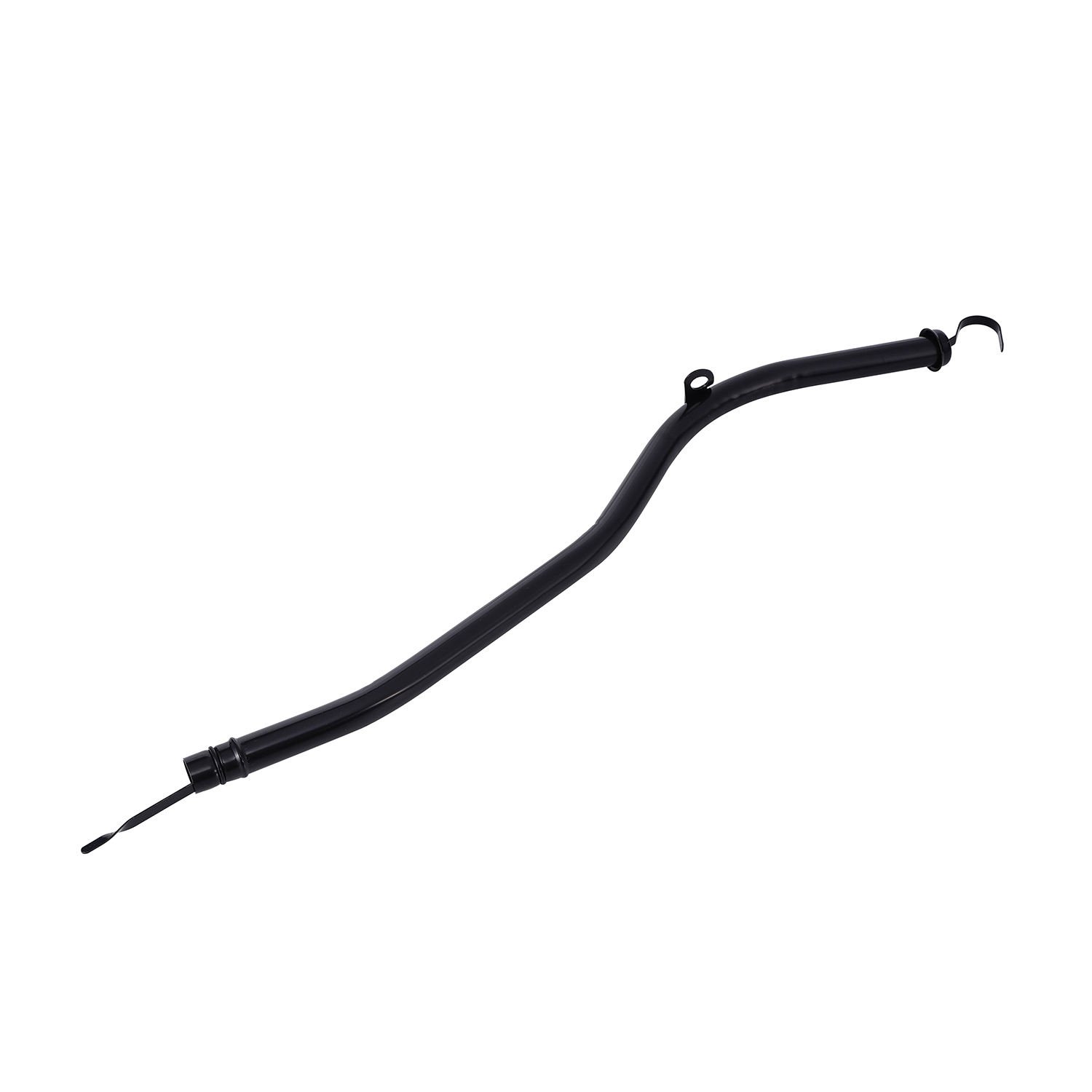
Dipstick Tube Design Features
| Component | Function | Maintenance Note |
|---|---|---|
| Handle | Grip for removal/insertion | Keep clean to prevent contamination |
| Metal shaft | Fluid level indicator | Inspect for bends or damage |
| Ring marking | Full level indicator | Verify visibility and alignment |
| O-ring seal | Prevents fluid bypass at tube | Replace if hardened or missing |
| Vent notch | Allows air pressure equalization | Keep unobstructed |
Reading Procedure: Engine Running Method
Step-by-Step Protocol
- Vehicle preparation: Position vehicle on level ground. Allow engine to reach operating temperature through normal driving (15-20 minutes of driving) or idle warm-up (5-10 minutes at idle).
- Transmission cycling: With foot on brake, move shifter through all positions (P → R → N → D → L or S if equipped) and return to Park. This circulates fluid through the torque converter and valve body.
- Engine idle maintenance: Return to Park and maintain engine at idle speed. Engine must remain running throughout the inspection process.
- Dipstick extraction: Locate dipstick tube (typically on passenger side of engine bay, forward of transmission). Pull dipstick straight out with gentle twisting motion if resistance occurs.
- Initial assessment: Note fluid color and odor immediately upon extraction before wiping.
- Wipe and reinsert: Wipe dipstick completely clean using lint-free cloth or paper towel. Reinsert fully until cap seats against tube.
- Final reading: Remove dipstick and observe fluid level against markings. Note which marks the fluid reaches and whether level falls within cross-hatched acceptable zone.
Level Interpretation Matrix
| Reading Position | Fluid State | Required Action |
|---|---|---|
| Above FULL marking | Overfilled | Drain excess fluid immediately |
| At FULL or within cross-hatch | Optimal | No action required |
| Between FULL and ADD | Acceptable | Monitor and add at next service |
| At ADD marking | Minimum acceptable | Add fluid at earliest opportunity |
| Below ADD marking | Critically low | Immediate fluid addition required |
Reading Procedure: Engine-Off Method
Ford and Select Asian Manufacturer Protocols
Certain vehicles specify engine-off reading procedures. This methodology differs from standard protocols and requires specific execution:
- Drive vehicle for 10-15 minutes to warm transmission fluid
- Park on level surface and set parking brake
- Engine-off with vehicle in Park
- Wait 60-90 seconds for fluid settling
- Remove dipstick and read level against COLD markings or cross-hatched range
Critical Procedure Differences
| Procedure Aspect | Engine Running | Engine Off |
|---|---|---|
| Engine state | Running at idle | Stopped |
| Temperature reference | HOT markings primary | COLD markings primary |
| Reading timing | Immediately while hot | After settling period |
| Accuracy consideration | Dynamic fluid level | Static fluid level |
Important: Never mix procedures. If manufacturer specifies engine-off reading, checking with engine running will yield inaccurate (typically low) readings. Always verify procedure for your specific vehicle.
Fluid Condition Analysis: Color Indicators
Color Spectrum and Implications
| Color | Condition State | Diagnostic Implication |
|---|---|---|
| Clear, bright red | Optimal | Fresh fluid, proper condition |
| Dark cherry red | Normal aged | Fluid approaching service interval |
| Dark brown | Aged with oxidation | Service recommended |
| Black or charcoal | Severe degradation | Immediate service required |
| Pink or diluted | Contamination | Coolant or water intrusion |
| Milky or foamy | Emulsified fluid | Water contamination, seal failure |
| Orange or amber | Oxidation products | Extended service neglect |
Visual Condition Assessment
Transparency indicator: Healthy transmission fluid exhibits transparency allowing reading of markings when dipped. Cloudy or opaque fluid indicates contamination or thermal degradation requiring service.
Particulate matter: Visible particles, metal fragments, or debris on dipstick indicate internal wear requiring investigation. Small amounts of fine material may indicate normal wear; heavy contamination suggests imminent failure.
Fluid Condition Analysis: Odor Assessment
Odor Classification System
| Odor Characteristic | Interpretation | Recommended Action |
|---|---|---|
| Slightly sweet, clean | Normal fluid | No action required |
| Petroleum solvent | Heated normal fluid | Check for overheating |
| Burnt paper or clutch | Overheated fluid | Immediate service |
| Acrid burning smell | Severe overheating | Immediate inspection |
| Sour or acidic | Fluid breakdown | Service recommended |
| Musty or moldy | Water contamination | Investigate seal leakage |
Burnt Odor Specifics
Burnt transmission fluid smell indicates thermal stress beyond normal operating parameters. This condition commonly results from:
- Extended fluid service intervals
- Towing or severe-duty operation
- Low fluid level causing slippage heat
- Transmission overheating conditions
- Incompatible fluid usage
Burnt smell requires immediate fluid inspection and likely transmission service to prevent damage progression.
Reading Errors and Corrections
Common Dipstick Reading Mistakes
| Error Type | Consequence | Correction Method |
|---|---|---|
| Reading cold when HOT specified | False low reading | Check against HOT markings |
| Inclined vehicle surface | Unreliable level | Reposition on level ground |
| Wiping insufficiently | Contamination in reading | Clean completely, re-read |
| Reinserting improperly | Improper depth | Insert fully until seated |
| Contaminated hand contact | Foreign material introduction | Clean hands before inspection |
| Ignoring fluid condition | Missed diagnostic signs | Always assess color and smell |
Inconsistent Reading Resolution
If readings vary between checks:
- Verify consistent temperature before each reading
- Ensure vehicle surface levelness
- Confirm full dipstick insertion before removal
- Check for dipstick tube misalignment
- Inspect O-ring condition at tube connection
- Verify correct dipstick installation (not bent)
Level Troubleshooting
Low Fluid Diagnostic Approach
When dipstick indicates low fluid level:
- Inspect for external leaks (pan gasket, cooler lines, seals)
- Check transmission pan for leakage evidence
- Examine shift selector for internal leak indication
- Verify torque converter seal condition
- Add fluid to bring to proper level
- Monitor for recurring low level
Temporary solution: Adding fluid restores operation but does not address leak source. Persistent low level indicates leak requiring professional diagnosis and repair.
Overfilled Transmission Protocol
Overfilling causes operational issues:
- Fluid aeration during component rotation
- Erratic shift quality and timing
- Pressure regulation problems
- Cooler performance reduction
- Seal weeping and external leakage
Correction: Fluid must be removed by suction through dipstick tube using appropriate pump equipment. Do not attempt to drain through transmission drain plug if equipped—may not have drain provision and requires professional service.
Professional Inspection Checklist
Pre-Reading Vehicle Assessment
- Vehicle on level surface
- Engine at operating temperature (or per specification)
- Transmission in Park position
- Engine running at idle (or stopped per procedure)
- Brake pedal depressed during gear cycling
Dipstick Inspection Steps
- Locate transmission dipstick (typically forward of engine)
- Remove dipstick with gentle extraction
- Note initial fluid color and odor
- Wipe completely clean
- Reinsert fully until cap seats
- Remove and observe level against markings
- Assess color against condition guide
- Evaluate odor against normal parameters
Post-Inspection Actions
- Record level finding and fluid condition
- Add fluid if below minimum specification
- Drain fluid if overfilled
- Note any concerning color or odor
- Schedule service if condition indicates
- Reinstall dipstick securely
Vehicle-Specific Considerations
Domestic Manufacturer Protocols
| Manufacturer | Typical Procedure | Special Considerations |
|---|---|---|
| Ford | Engine-off cold reading common | Some models use sealed dipstick |
| GM/Chevy | Engine running hot reading | Check for褐O-ring seal condition |
| Chrysler/Dodge | HOT reading primary | Verify type-specific fluid |
| Ram/Jeep | HOT markings primary | Hemi engines have unique dipstick |
Import Manufacturer Protocols
| Manufacturer | Typical Procedure | Special Considerations |
|---|---|---|
| Toyota | Engine running, HOT preferred | Some hybrids use different procedure |
| Honda | Engine running hot reading | DW-1 fluid specification critical |
| Nissan | HOT reading specified | Check CVT fluid separately |
| Subaru | Engine running hot reading | Non-turbo and turbo differ |
FAQ: Technical Clarifications
Q: What do the marks on a transmission dipstick mean?
A: Transmission dipstick markings indicate fluid level relative to safe operating parameters. Typical markings include: LOW or ADD (minimum safe level requiring immediate attention), FULL or F (optimal operating level), HOT (reference reading at operating temperature), COLD (reference reading at ambient temperature), and cross-hatched zones indicating acceptable operating ranges. Always reference the HOT markings when operating temperature is specified.
Q: How do you properly read a transmission dipstick level?
A: Proper dipstick reading requires vehicle on level surface, engine at operating temperature (or per manufacturer specification), transmission in Park, and engine running at idle. Remove dipstick, wipe completely clean, reinsert fully, then remove to observe fluid level against markings. The fluid should fall within the cross-hatched acceptable zone between ADD and FULL on HOT specification. Always clean dipstick between readings to prevent contamination affecting perception.
Q: What color should transmission fluid be on the dipstick?
A: Healthy transmission fluid appears clear and bright red, transitioning to dark red or brown with normal aging. Clear bright red indicates fresh fluid. Dark red to brown indicates normal aging at higher mileage. Black or charcoal color indicates severe degradation requiring immediate service. Pink or milky appearance indicates water or coolant contamination requiring urgent attention.
Q: Should you check transmission fluid with engine running or off?
A: Most automatic transmissions require engine-running inspection with HOT markings as the primary reference. Engine-off readings apply to specific manufacturers (primarily Ford and some Asian brands). Always verify procedure for your specific vehicle—checking with engine running when specification requires engine-off will yield false low readings. Consult owner’s manual or look for HOT/COLD marking specifications on dipstick.
Q: What does burnt transmission fluid smell like?
A: Burnt transmission fluid produces an acrid odor resembling burnt paper, overheated clutch material, or burned automatic transmission fluid (ATF). This smell indicates thermal degradation beyond normal operation, commonly from low fluid levels, extended service intervals, severe-duty operation, or transmission overheating. Burnt smell warrants immediate fluid inspection and likely service to prevent transmission damage progression.
Q: How can you tell if transmission fluid is bad just by looking at the dipstick?
A: Visual assessment reveals multiple condition indicators. Color changes from bright red to brown/black indicate degradation. Cloudiness or opacity suggests contamination. Visible particles or metal flakes indicate internal wear. Foam or bubbles indicate aeration from overfill or internal issues. Combining visual inspection with odor assessment provides reliable fluid condition evaluation without laboratory analysis.
Where to Buy a Where to Buy a 24 Inch Transmission Dipstick and Tube
If you’re looking for a reliable supplier, it’s important to choose a manufacturer that offers:
- Stable product quality
- Consistent supply
- Wholesale support
- OEM branding options
For bulk orders or reseller inquiries, you can check this product page:
If you’re looking for a reliable supplier, it’s important to choose a manufacturer that offers:
- Stable product quality
- Consistent supply
- Wholesale support
- OEM branding options
For bulk orders or reseller inquiries, you can check this product page: