
What Is a Spool for a Rear End? Complete Guide to Differential Spools
If you’ve spent any time around performance vehicles, racing, or off-road trucks, you’ve probably heard the term “spool” mentioned when discussing rear ends. The phrase “throwing a spool in the rear end” conjures images of track cars, drag racers, and serious performance builds. But what exactly is a spool for a rear end, and why would you want one?
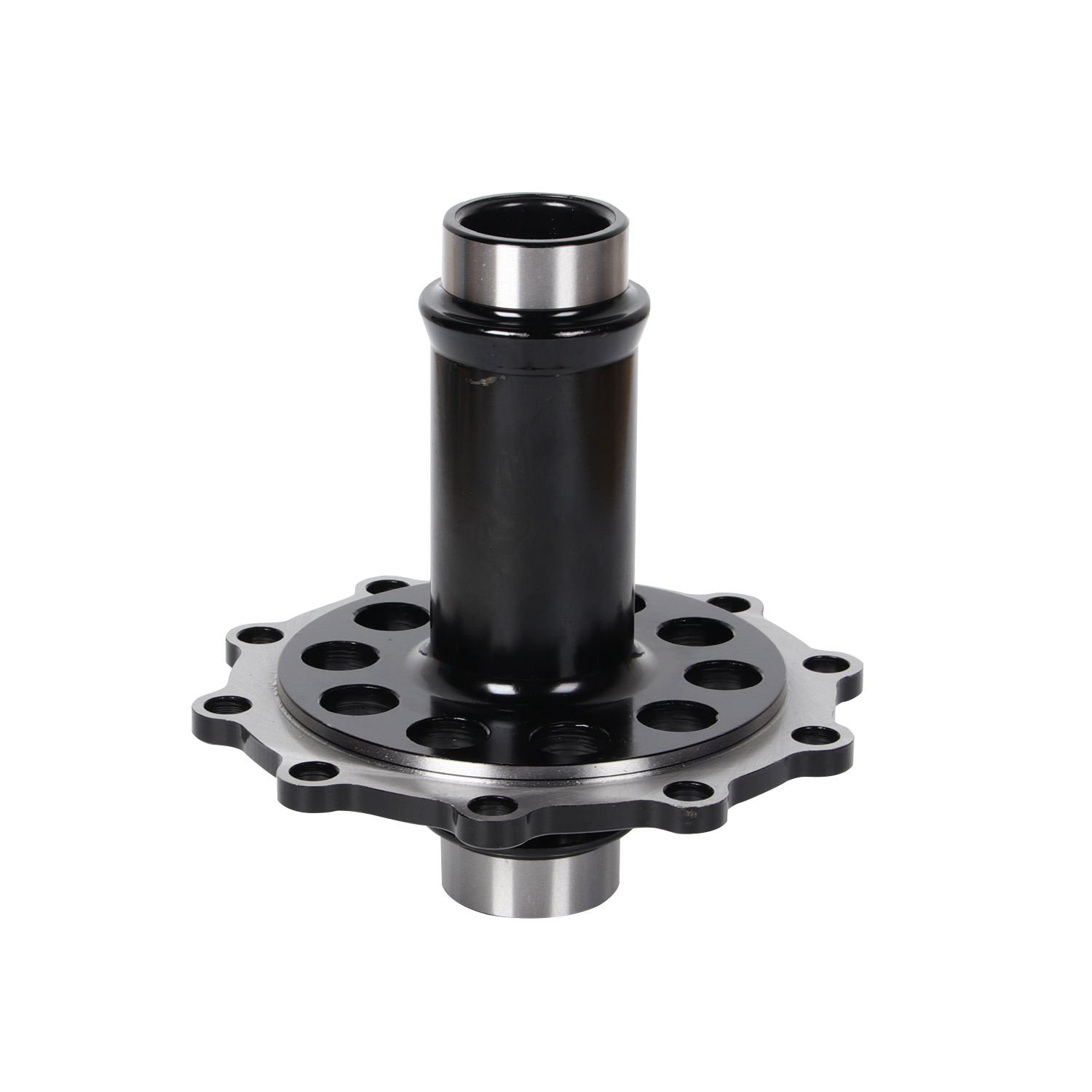
Understanding differential spools means understanding a fundamental component of how your vehicle’s drivetrain works. The rear end—more formally called the rear differential—distributes power from the driveshaft to the rear wheels while allowing those wheels to rotate at different speeds during cornering. A spool changes how that differential operates in ways that dramatically affect vehicle behavior.
This guide covers everything you need to know about rear end spools: what they are, how they work, why you’d install one, the different types available, and whether a spool makes sense for your application.
Understanding the Rear Differential
Before understanding what a spool does, you need to understand what the rear differential is and how it normally functions.
How a Standard Differential Works
Your vehicle’s differential serves a critical purpose: it allows the rear wheels to rotate at different speeds while both receiving power. This is essential during cornering. When you turn, the outside wheel travels a longer path than the inside wheel. Without a differential, both wheels would be forced to rotate at the same speed, causing tire scrubbing, power loss, and difficult steering.
A standard open differential uses a set of gears—typically a ring and pinion gear set plus spider gears—to transfer power from the driveshaft to the axle shafts while allowing the wheels to rotate independently. The spider gears freewheel as needed during turns, letting the inside wheel rotate slower while the outside wheel rotates faster.
This works great for normal driving. However, the open differential has a fundamental limitation: it sends power to the wheel with the least traction. If one rear tire is on ice, gravel, or in the air, that wheel spins freely while the other wheel barely receives any power. This is why vehicles with open differentials get stuck when one wheel loses traction.
The Traction Problem
The standard differential’s behavior is fine for street driving on consistent surfaces. But performance driving, racing, and off-roading often demand more traction than an open differential can provide. When you accelerate hard, weight transfers to the rear wheels, and the differential still sends power according to the same principles.
For drag racing, you want both tires planting consistently for maximum traction off the line. For drifting, you need the rear wheels to break loose predictably. For off-roading, you need both wheels pulling even when one loses traction. The open differential can’t provide these characteristics.
This is where a spool comes in.
What Is a Spool for a Rear End?
A spool is a modification to the differential that locks the two axle shafts together, causing both wheels to rotate at the same speed regardless of conditions. When you install a spool, the differential essentially stops functioning as a differential—it becomes a straight axle where both wheels are mechanically linked.
The Spool Concept
A spool is typically a single-piece or two-piece metal component that replaces the spider gears and cross shaft in an open differential. Where the spider gears would allow the axle shafts to rotate independently, the spool locks them solid. The axle gears (side gears) now turn together as a single unit.
When you install a spool, both rear wheels are always locked together. They spin at exactly the same speed, all the time. There is no differential action—no freewheeling, no independent rotation, no traction-splitting behavior.
This has profound effects on vehicle behavior.
How a Spool Changes Everything
With a spool installed, your vehicle becomes impossible to turn without the tires breaking loose. During any corner, both rear wheels are forced to rotate together, so they must scrub against the pavement. This makes tight turning difficult or impossible—you’re essentially dragging the inside wheel through the turn.
However, the traction benefits are substantial. Both wheels always receive equal power, and both wheels always contribute to braking. One wheel can never spin freely while the other sits idle. For applications where traction matters more than drivability, this trade-off is worthwhile.
Types of Differential Spools
Not all spools are created equal. Different designs offer different characteristics, and understanding the options helps you choose the right spool for your application.
Full Spool
A full spool replaces the entire differential internals with a solid, one-piece (or two-piece bolted together) steel component. The side gears thread or bolt directly to the spool, and the axles connect as they normally would. This is the strongest option—there’s nothing to break or fail under extreme loads.
Full spools are the choice for serious racing applications where maximum strength is required. Drag racers, circle track racers, and off-road competitors often run full spools because they never fail. The solid construction handles the highest torque loads without complaint.
The trade-off is weight. Full spools are heavier than the components they replace. For racing where reliability trumps weight savings, this matters little. For street-driven vehicles where every unsprung weight pound affects handling, it can be significant.
Mini Spool
A mini spool replaces the spider gears and cross shaft but uses the existing side gears from your differential. This design fits within the original differential housing and uses your original components where possible. Installation is often simpler because the mini spool is designed to bolt in place of the spider gear assembly.
Mini spools offer a middle ground: the locking behavior of a spool with easier installation and lower cost. They’re popular for street performance applications where the vehicle sees both track use and regular driving.
The potential drawback is strength. Mini spools rely on the factory side gears, which may not be as strong as purpose-built full spool components. For moderate power levels and performance use, mini spools work well. For extreme power or competitive racing, the full spool is often preferred.
Detroit Locker (Automatic Locking Differential)
While not technically a “spool,” the Detroit Locker is worth mentioning because it provides spool-like behavior without the downsides of a solid spool. The Detroit Locker (also called a detroit locker or lunchbox locker) is a automatic locking differential that acts like an open differential during coasting and light throttle, then locks solid when you apply power.
The Detroit Locker clicks when it locks and unlocks—a distinctive sound that many enthusiasts recognize. It provides the traction benefits of a spool during acceleration while allowing normal turning when you lift off the throttle.
For street-driven vehicles that see performance use, a Detroit Locker often makes more sense than a solid spool. You get the best of both worlds: normal driving characteristics most of the time, with locked traction when you need it.
Welded Differential
Before spools were readily available, enthusiasts would simply weld the spider gears to the differential case, effectively creating a homemade spool. A welded differential locks the gears solid and performs the same function as a commercial spool.
Welded differentials are the budget option—they cost nothing beyond welding labor if you have the skills. However, they lack the precision of machined spools and the strength of purpose-built components. Welds can break under extreme stress, and the uneven forces in a welded assembly can cause premature wear.
For permanent racing applications where the vehicle will never see street driving, welded spiders are acceptable. For anything else, a commercial spool is a better choice.
Why Install a Spool in Your Rear End?
The question “what is a spool for a rear end” is only the first question. The second question is: why would you want one?
Maximum Traction
The primary benefit of a spool is consistent, maximum traction from both rear wheels. When you accelerate, both tires plant. When you brake, both tires contribute. There’s never a situation where one tire spins uselessly while the other does all the work.
For drag racing, this maximum traction is essential. A car with a spool launches harder because both tires work together rather than one tire fighting for traction while the other spins freely.
For off-roading, the spool ensures both wheels pull when one loses traction. No more getting stuck because one tire is on a rock while the other is on mud.
For racing applications, the consistent traction from a spool makes the vehicle more predictable and easier to drive at the limit.
Predictable Handling
A spool makes vehicle behavior predictable. With both wheels locked together, you always know exactly how the rear end will behave. There’s no differential action to compensate for, no surprises when one wheel breaks traction.
This predictability is valuable for learning vehicle dynamics. When the rear breaks loose, both wheels break loose together. When you accelerate out of a corner, both wheels pull together. This consistency helps drivers develop feel and timing.
For experienced drivers, this predictability is a tool. They know precisely how the vehicle will respond and can use that knowledge to their advantage.
Simplicity and Strength
Spools are simple components with no moving parts to fail (except for the Detroit Locker, which is a different category). There’s nothing to malfunction, nothing to adjust, nothing to wear out in normal use.
The solid construction of most spools handles extreme torque loads without complaint. When you’re making massive power or applying severe loads, a spool won’t let you down.
For racing where reliability is paramount, this simplicity is invaluable. You can trust that the rear end will perform consistently run after run, lap after lap.
The Downsides of Installing a Spool
Understanding what a spool for a rear end is means understanding its trade-offs. Spools aren’t right for every application.
Difficult or Impossible Turning
The biggest downside of a spool is how it affects turning. With both wheels locked together, tight turns require the tires to scrub. At low speeds, you may struggle to turn the vehicle at all. You might need to manually turn the steering wheel while rocking the vehicle forward and backward to navigate tight spots.
This is why spools are generally unsuitable for street-driven vehicles in urban environments. The daily drive to the store becomes an exercise in tire scrubbing and difficult maneuvering.
Tire Wear
The tire scrubbing during turns accelerates tire wear dramatically. A vehicle with a spool will chew through rear tires much faster than one with a standard differential. For street use, this becomes expensive.
For racing applications, tire wear is managed through setup and driving technique. For street use, expect rear tire replacement every few thousand miles if you drive aggressively.
Handling Changes
The locked rear end changes handling characteristics fundamentally. The vehicle becomes more prone to oversteer (rear-end break loose) because both wheels lose traction simultaneously. This can be jarring for drivers accustomed to standard differentials.
The handling change isn’t necessarily bad—it can be an advantage in skilled hands—but it requires adaptation and understanding. Drivers must learn to manage the locked rear end’s characteristics.
Noise and Feel
Spools can produce additional noise during operation. The solid connection between components means vibrations transfer more readily. You might notice increased driveline noise, especially during coasting or deceleration.
The vehicle also feels different—more mechanical, less refined. For enthusiasts, this is part of the appeal. For regular drivers, it can be annoying.
Applications for Rear End Spools
Where do spools make sense? Understanding the applications helps you decide if one is right for your vehicle.
Drag Racing
Spools are nearly universal in serious drag racing. The maximum traction from both tires is essential for strong launches. Drag cars typically launch at high power levels with the tires at the edge of traction—the spool ensures both tires work together rather than one spinning while the other waits.
Many drag racers run spools alongside other modifications: sticky slicks, suspension adjustments, and weight reduction. The spool is one piece of a comprehensive approach to making the car go faster.
Circle Track Racing
Circle track racing (stock car racing on oval tracks) uses spools extensively. The constant left turns on oval tracks mean the differential action of a standard differential isn’t particularly useful. The spool provides strength and consistency lap after lap.
The handling characteristics of a spool actually work well for circle track because the turns are predictable and consistent. You always turn left, so you can set up the vehicle to handle the locked rear end appropriately.
Drifting
Surprisingly, many drift cars use spools or locking differentials. Drifting requires breaking the rear tires loose deliberately, and a spool makes that break loose consistent and predictable. Once the car is sliding, both wheels pull together, maintaining the drift.
The spool’s downside of difficult turning becomes irrelevant because drifting involves controlled sliding anyway. The predictability of the locked rear end helps drivers maintain drifts consistently.
Off-Roading
Serious off-road vehicles often run spools or locking differentials. When you’re rock crawling or mudding, traction is everything. A spool ensures both wheels pull regardless of what each tire is standing on.
Many off-road spools are combined with other traction devices: air lockers, selectable differentials, and tire inflation systems. The spool provides a baseline of traction that works even when other systems fail.
Street Rods and Performance Builds
Street rods and custom performance builds frequently use spools as part of a comprehensive approach. These vehicles are often driven hard on the street but see occasional track use or organized events where the spool’s characteristics are beneficial.
For these applications, drivers adapt to the spool’s characteristics and plan their routes to minimize difficult maneuvers. The trade-off of occasional inconvenience is worth the performance benefits.
Installing a Spool in Your Rear End
If you’ve decided a spool is right for your application, understanding the installation process helps you plan and budget.
Professional Installation Required
Spool installation requires differential expertise. The rear end must be opened, the differential disassembled, the spool installed, and the assembly properly shimmed and set up. This isn’t a casual weekend project unless you have experience with drivetrain work.
Plan on having the installation done by a professional drivetrain shop or a highly experienced mechanic. The cost is typically $200-500 for labor depending on the shop and your vehicle, plus the cost of the spool itself.
Choosing the Right Spool
Select a spool designed for your specific differential. Differentials vary by manufacturer, gear ratio, and design. A spool for a Ford 9-inch rear end won’t fit a GM 12-bolt or a Dana 60. Know your differential before ordering.
Quality matters. Choose reputable brands with good track records. Cheap spools may have machining errors that cause noise, wear, or failure. The spool is a safety-critical component—reliability matters.
Break-In Procedures
After installing a spool, follow any break-in procedures recommended by the manufacturer. This might include limited power application for the first few hundred miles, specific oil requirements, or other procedures. Proper break-in ensures the components seat correctly and perform reliably.
Maintenance
Spools generally require minimal maintenance beyond regular fluid changes. Use the differential fluid weight and type recommended by the manufacturer. Check for any unusual noise or behavior that might indicate problems.
Spool vs. Other Differential Options
How does a spool compare to other traction solutions?
Spool vs. Limited Slip Differential
A limited slip differential (LSD) allows some differential action while still sending power to both wheels. It’s a compromise between an open differential and a spool.
LSDs work well for street driving—they provide traction without the difficult turning of a spool. However, they don’t provide the maximum traction of a spool and can be less predictable under extreme conditions.
For street-driven vehicles, an LSD often makes more sense than a spool. For dedicated race vehicles, the spool’s maximum traction is preferred.
Spool vs. Locker
Locking differentials (lockers) provide spool-like traction when engaged but allow normal differential action when disengaged. Selectable lockers (air lockers, electric lockers) give you the choice of when to lock.
The Detroit Locker is an automatic option that locks under power but unlocks during coast. This gives you spool-like behavior during acceleration with better coasting characteristics.
For vehicles that need to switch between locked and unlocked states, a locker system is appropriate. For vehicles that always run locked, a spool is simpler and stronger.
Spool vs. Torsen Differential
Torsen differentials use gear geometry to provide traction without the locking behavior of a spool. They send more power to the wheel with more traction without completely locking the axle shafts.
Torsen units are sophisticated but expensive. They don’t provide the maximum traction of a spool, but they offer a refined alternative for certain applications. High-performance street cars sometimes use Torsen differentials for the traction benefits without the harshness of a spool.
Is a Spool Right for You?
After understanding what a spool for a rear end is and its characteristics, the final question is whether it’s appropriate for your vehicle and driving style.
Choose a Spool If:
- Your vehicle is primarily used for racing or serious performance driving
- You understand and accept the handling trade-offs
- Traction is your primary concern
- You don’t mind the additional maintenance and tire wear
- Your vehicle will spend minimal time navigating tight turns
Avoid a Spool If:
- Your vehicle is a daily driver in urban environments
- You need easy maneuverability in tight spaces
- You want refined, normal driving characteristics
- Tire wear and replacement costs are a concern
- You’re not prepared to adapt your driving style
Summary: Key Points to Remember
- A spool locks both rear axle shafts together, eliminating differential action and ensuring both wheels rotate at the same speed
- Maximum traction is the primary benefit, with both wheels always working together
- Difficult turning is the primary trade-off, with tire scrubbing during maneuvers
- Full spools and mini spools offer different strength and installation characteristics
- Spools suit racing, off-roading, and serious performance builds rather than street-driven daily drivers
- Professional installation is recommended, as differential work requires expertise
- Consider alternative options like LSDs or lockers if you need a compromise solution
Understanding what a spool for a rear end is helps you make informed decisions about your vehicle’s drivetrain. For applications where traction trumps everything else, a spool provides the maximum traction available from a mechanical system. For everything else, other differential solutions may serve better.