
How to Install Throttle Return Spring: Complete Technical Guide
The throttle return spring provides the closing force that returns the throttle plates to idle position when the driver releases the accelerator pedal. This essential safety component ensures the engine returns to idle speed and prevents runaway acceleration scenarios. Without proper return spring function, throttle plates could remain in an open position, creating dangerous operating conditions.
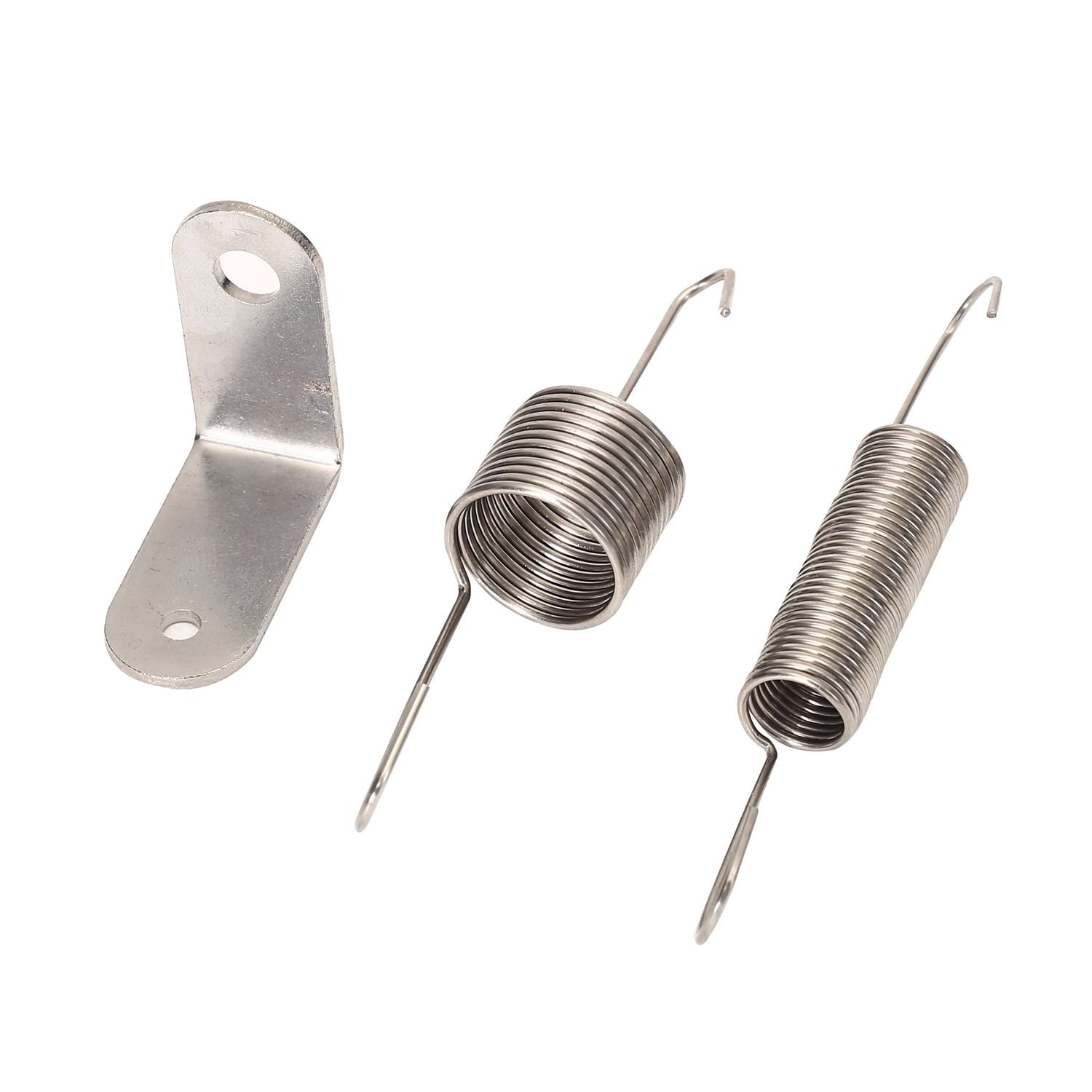
This technical guide provides comprehensive installation methodology for throttle return springs across various carbureted applications, ensuring proper function and safe vehicle operation.
Throttle Return Spring Fundamentals
Core Function and Purpose
| Function | Description | Safety Implication |
|---|---|---|
| Throttle closure | Returns throttle plates to idle position | Prevents runaway acceleration |
| Idle restoration | Establishes controlled idle speed | Ensures drivability |
| Governor assistance | Supports governor mechanism function | Maintains engine speed control |
| Fallback return | Secondary closure if primary fails | Redundant safety feature |
Spring Classification System
| Spring Type | Application | Tension Range | Mounting Method |
|---|---|---|---|
| Light duty return | Small single-barrel carbs | 2-4 pounds | Single-point mount |
| Medium duty return | 2-barrel carburetors | 4-8 pounds | Bracket mount |
| Heavy duty return | 4-barrel performance carbs | 8-15 pounds | Multiple mounting points |
| Competition return | High-performance applications | Adjustable | Custom bracket systems |
Pre-Installation Assessment
Compatibility Verification
Before installing a throttle return spring, verify system compatibility:
- Carburetor type identification: Determine carburetor model and configuration (single-barrel, 2-barrel, 4-barrel, spread bore, etc.)
- Existing mounting provisions: Inspect carburetor throttle linkage for return spring mounting holes, brackets, or tabs
- Linkage geometry assessment: Evaluate throttle shaft position and lever configuration to determine optimal spring routing
- Return spring specification selection: Match spring tension rating to carburetor size and application requirements
Tools and Materials Required
| Tool | Purpose | Specification Note |
|---|---|---|
| Spring hook tool | Spring installation/removal | Hook end sized for spring coils |
| Combination wrenches | Bracket mounting hardware | Match fastener sizes |
| Socket set | Accessible fastener removal | Metric or SAE as applicable |
| Pliers | Spring end manipulation | Locking pliers prevent slippage |
| Threadlocker | Prevent bracket loosening | Medium-strength grade |
Installation Procedure: Carburetor-Mounted Springs
Standard Carburetor Return Spring Installation
Step 1: Access preparation
- Remove air cleaner assembly for adequate access to carburetor throttle linkage
- Verify throttle plates close completely by manually moving linkage
- Identify return spring mounting hole on throttle lever (usually inner hole for lighter tension)
- Locate return spring anchor point on carburetor body or intake manifold
Step 2: Spring connection initiation
- Attach spring hook tool to return spring end (typically the longer, lighter tension end)
- Guide spring hook through throttle lever mounting hole
- Release spring hook to secure spring end in lever hole
- Verify spring is seated in hole and cannot disengage during operation
Step 3: Anchor point connection
- Position vehicle components to allow spring routing without binding
- Stretch spring toward anchor point, maintaining alignment with throttle movement arc
- Locate anchor hole or tab on carburetor body, manifold, or mounting bracket
- Using spring hook tool, engage spring end in anchor point
- Verify both connections are secure before releasing tension
Step 4: Tension verification
- Manually operate throttle through full range of motion
- Observe spring compression and extension during throttle movement
- Verify throttle returns to idle position without hesitation
- Confirm spring does not bind against any components during travel
- Check that spring is nearly fully extended at wide-open throttle position
Holley Carburetor Installation
Holley carburetors feature specific return spring mounting provisions:
- Locate throttle lever return spring hole (holes marked 1 and 2 for accelerator pump operation)
- Select appropriate hole based on desired return rate (inner hole = lighter tension, outer hole = heavier tension)
- Connect spring to throttle lever hole using spring hook
- Route spring to return spring bracket on carburetor body
- Engage spring end in bracket hole and verify secure connection
- Cycle throttle to verify smooth operation and proper return tension
Installation Procedure: Bracket-Mounted Systems
Universal Bracket Installation
Many applications require auxiliary mounting brackets for proper spring positioning:
Bracket selection and positioning:
- Identify suitable mounting location on intake manifold, firewall, or chassis
- Position bracket to align spring path with throttle linkage movement arc
- Ensure bracket location allows spring to be nearly fully extended at wide-open throttle
- Mount bracket using appropriate fasteners and threadlocker
Spring installation:
- Attach spring to throttle lever return spring hole
- Route spring toward bracket mounting location
- Using spring hook, engage spring end in bracket adjustment slot
- Select initial mounting position (center of adjustment range provides adjustment flexibility)
- Verify throttle operation through full range
Custom Bracket Fabrication
When factory mounting provisions are inadequate:
- Fabricate bracket from steel material (minimum 1/8-inch thickness)
- Include adjustment slots for fine-tuning spring tension
- Position hook points to achieve proper spring angle (inline with throttle movement preferred)
- Mount bracket securely to engine or chassis using appropriate fasteners
Spring Tension Adjustment
Tension Assessment Criteria
| Condition | Indication | Adjustment Required |
|---|---|---|
| Spring too weak | Throttle hesitates returning to idle | Increase tension or replace with heavier spring |
| Spring too strong | Stiff throttle pedal, difficult acceleration | Reduce tension or use lighter spring |
| Binding at mid-travel | Spring catching on components | Reposition spring routing |
| Full extension insufficient | Spring nearly compressed at wide-open | Extend mounting distance or use longer spring |
Adjustment Methodology
Increasing tension:
- Disconnect spring from anchor point using spring hook
- Move anchor point to position further from throttle lever
- Reconnect spring and verify throttle operation
- Alternatively, select outer mounting hole on throttle lever for increased tension
Decreasing tension:
- Disconnect spring from anchor point
- Move anchor point closer to throttle lever
- Reconnect spring and test throttle response
- Alternatively, select inner mounting hole for reduced tension
Proper Tension Specifications
| Application | Target Tension | Verification Method |
|---|---|---|
| Street normal driving | Throttle returns without hesitation | Visual observation of return speed |
| Performance street | Slightly faster return, still comfortable | Feel resistance during pedal operation |
| Drag racing | Aggressive return rate | Maximum return speed without pedal jarring |
| Idle stability | Minimal additional tension | Idle speed stable with spring installed |
Linkage Integration Considerations
Dual-Return Spring Systems
High-performance applications may utilize dual return springs:
| Configuration | Application | Benefits |
|---|---|---|
| Primary + secondary | Competition vehicles | Redundant return function |
| Cross-linked springs | Balanced throttle operation | Even force distribution |
| Differential tension | Progressive return rate | Tunable response characteristics |
Governor Integration
On engines equipped with governor systems:
- Verify return spring does not interfere with governor linkage
- Confirm governor can overcome return spring tension at specified RPM
- Adjust return spring tension to complement governor function
- Test governor response with return spring installed
Common Installation Errors
Mounting Mistakes
| Error | Consequence | Prevention |
|---|---|---|
| Wrong hole selection | Excessive or insufficient tension | Test both holes before finalizing |
| Spring binding on components | Erratic throttle operation | Verify clearance through full travel |
| Incorrect spring angle | Uneven tension, premature wear | Align spring inline with throttle movement |
| Loose bracket mounting | Spring position drift | Use threadlocker, verify fastener tightness |
Tension-Related Errors
| Error | Consequence | Correction |
|---|---|---|
| Excessive tension | Stiff throttle, difficult pedal feel | Move anchor point closer or use lighter spring |
| Insufficient tension | Slow throttle return, potential runaway | Move anchor point further or use heavier spring |
| Inconsistent tension | Uneven return rate | Verify spring not catching, check routing |
Safety Considerations
Critical safety check: Before operating vehicle after throttle return spring installation:
- Verify throttle plates close completely with engine off
- Confirm throttle returns to idle position when released
- Test accelerator pedal response and return speed
- Verify cruise control (if equipped) disconnects properly
- Ensure throttle does not stick in any position
Testing and Verification Protocol
Pre-Operation Testing
| Test | Expected Result | Failure Indication |
|---|---|---|
| Manual throttle travel | Throttle moves freely through full range | Binding, catching, or resistance |
| Spring return action | Throttle returns to idle position | Hesitation, incomplete return, or no return |
| Wide-open throttle | Spring nearly fully extended | Spring fully compressed indicates insufficient length |
| Return speed assessment | Throttle returns smoothly without jarring | Excessive force or slam-back |
Road Test Verification
- Start engine and allow idle stabilization
- Accelerate gradually, noting throttle response
- Release throttle and observe return behavior
- Verify idle speed returns to normal after acceleration
- Test full-throttle acceleration for any abnormalities
- Monitor for throttle sticking or hesitation during operation
FAQ: Technical Clarifications
Q: Where should a throttle return spring be mounted?
A: Throttle return springs mount between the throttle lever on the carburetor and a fixed anchor point on the carburetor body, intake manifold, or auxiliary bracket. The spring should be inline with throttle movement so it pulls the throttle closed when released. Most carburetors have designated mounting holes for return spring installation on either the throttle lever or body.
Q: How do you adjust throttle return spring tension?
A: Tension adjustment involves changing the mounting distance between throttle lever and anchor point. Moving the anchor point further away increases tension; moving it closer reduces tension. Additionally, throttle lever mounting holes provide tension options—inner holes provide lighter tension, outer holes provide heavier tension. Test throttle response after each adjustment to achieve desired return rate.
Q: What happens if throttle return spring is too weak?
A: A weak return spring may cause slow throttle closure, hesitation when releasing the accelerator, potential for throttle to remain partially open at idle, and unsafe runaway acceleration conditions if primary throttle fails to close. Weak springs should be replaced with appropriately rated springs for the application.
Q: Can a throttle return spring be too strong?
A: Excessive return spring tension creates stiff throttle pedal operation, making accelerator modulation difficult. Heavy tension can cause throttle to snap closed abruptly, creating uncomfortable pedal response. If tension is too strong, switch to a lighter spring or adjust mounting position to reduce force.
Q: How do you install a return spring on a Holley carburetor?
A: Holley carburetors feature throttle lever return spring holes (typically numbered or marked for accelerator pump applications). Connect spring to desired hole using spring hook, then route to return spring bracket on carburetor body. Engage spring in bracket hole and verify smooth throttle operation through full range. Select inner hole for lighter tension or outer hole for heavier tension based on application requirements.
Q: Why is my throttle return spring binding during operation?
A: Binding occurs when spring contacts other components during throttle movement. Causes include incorrect spring routing, insufficient clearance around linkage components, wrong spring length for application, or bracket positioning that interferes with throttle travel. Verify spring path through full range of motion and reposition routing or bracket as needed to eliminate contact.
Where to Buy a Throttle Return Spring?
If you’re looking for a reliable supplier, it’s important to choose a manufacturer that offers:
- Stable product quality
- Consistent supply
- Wholesale support
- OEM branding options
For bulk orders or reseller inquiries, you can check this product page:
If you’re looking for a reliable supplier, it’s important to choose a manufacturer that offers:
- Stable product quality
- Consistent supply
- Wholesale support
- OEM branding options
For bulk orders or reseller inquiries, you can check this product page: