
Rear Trailing Arm Replacement: Cost, Failure Signs, and What Happens If It Breaks
Let’s talk about the rear trailing arm. It’s one of those parts that sits in the back of your car doing important work, nobody thinks about it until something goes wrong, and when it does go wrong, you really need to know what’s happening. If you’re reading this, maybe you’ve got a clunking noise in the rear, someone mentioned your trailing arm might be bad, or you’re just trying to understand what this thing actually does.
Let’s get into it.
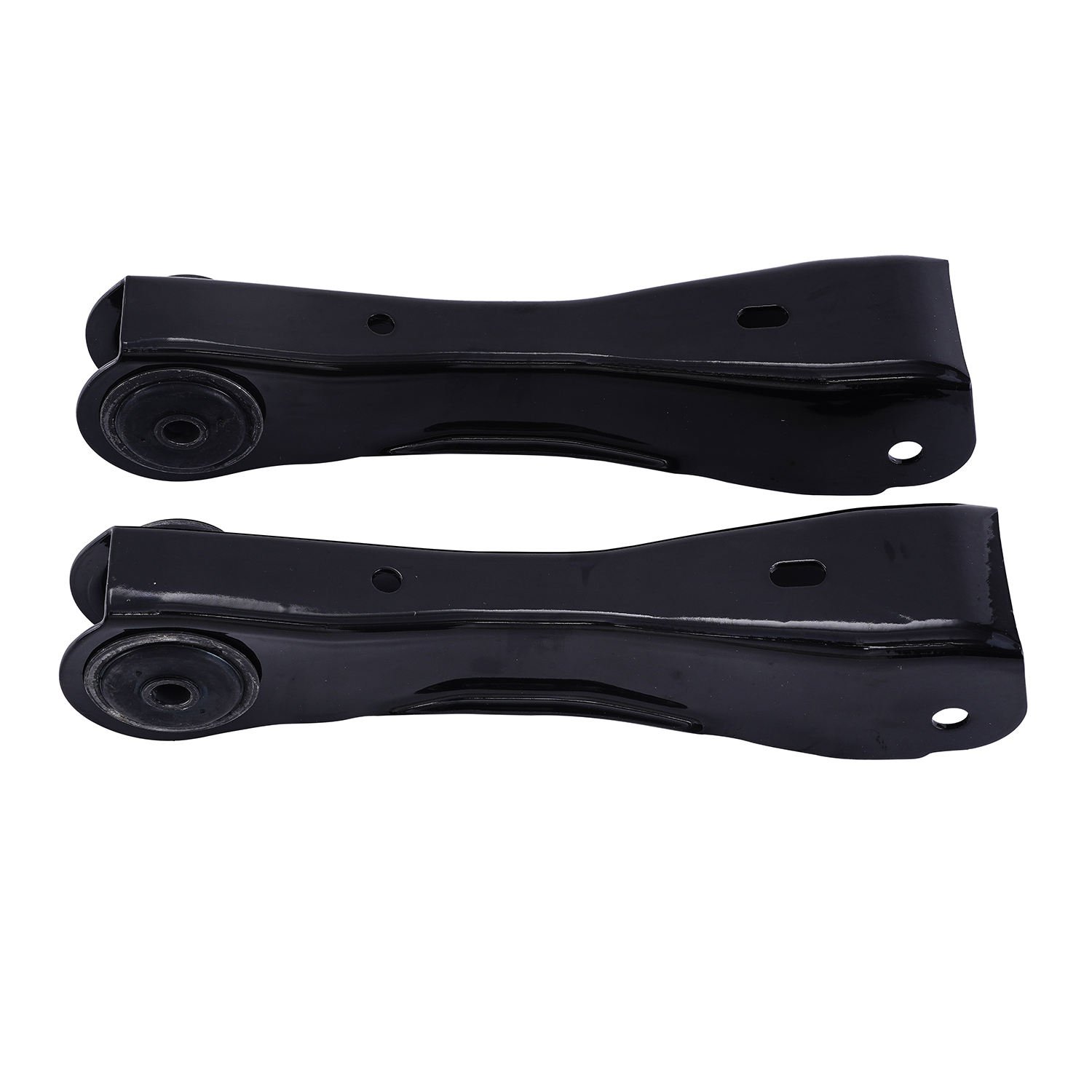
What Does a Rear Trailing Arm Actually Do?
The rear trailing arm is a suspension link that connects your rear axle to the vehicle frame or subframe. On most rear-wheel-drive and all-wheel-drive vehicles, the trailing arm controls the rear axle’s fore-and-aft movement—what happens when you accelerate or brake.
When you gun it, the axle wants to twist backward. The trailing arm resists that movement, keeping the axle in its proper position relative to the body. When you brake hard, the axle wants to twist forward. Again, the trailing arm keeps everything lined up.
It’s also carrying some of the vehicle’s weight and helping maintain rear alignment geometry. Without functioning trailing arms, your rear suspension would basically be a floppy mess.
Most rear trailing arms have bushings at each end—one at the frame mount, one at the axle mount. Some are purely rubber-bushed, some have adjustable linkages for alignment, some are fixed-length with cam bolts for alignment adjustment. Depends on your vehicle.
What Happens If a Rear Trailing Arm Breaks?
This is the question that matters most. Here’s the honest answer:
If a rear trailing arm breaks while you’re driving, the affected wheel loses its connection to the chassis. The axle can shift backward, forward, or sideways depending on what else is holding it. The result is unpredictable handling, a clunking noise every time you hit a bump or accelerate, and eventually—you’ll feel the car pulling to one side.
Let’s break down what actually happens:
| Severity | Symptoms | Danger Level |
|---|---|---|
| Worn bushings | Clunking over bumps, slight play visible | Moderate—get it fixed soon |
| Broken bushing | Clunking, visible axle shift, alignment issues | High—don’t drive far |
| Cracked arm | Sudden loss, unpredictable handling | Critical—don’t drive it |
A broken trailing arm won’t make your car undriveable immediately—usually. The other three trailing arms (most RWD cars have four total—two per side) will keep some measure of control. But you’re driving on borrowed time. Get it to a shop, not down the highway at 70 mph.
How Do You Know If Your Rear Trailing Arm Is Bad?
Signs that should make you investigate:
Audible: Clunking or popping from the rear suspension over bumps or during hard acceleration/braking. The noise is usually sharp and one-time per event, not a grinding continuous sound.
Visual: With the car on jack stands, grab the trailing arm near the bushing and try to wiggle it. Any movement = bad bushing. Look for torn rubber, cracked bushings, or visible deflection.
Feel: The car pulls to one side during straight driving or under braking. Trailing arm failure changes rear alignment geometry, and you’ll feel it in the steering.
Drivetrain vibes: On RWD cars, a failed trailing arm bushing can cause the rear axle to shift under power, creating vibration or affecting drive shaft angle. Sometimes this shows up as a shudder during hard acceleration.
How Much Does Rear Trailing Arm Replacement Cost?
Here’s what you actually want to know. Costs vary based on your vehicle, but here’s the general picture:
Parts Cost
| Vehicle Type | Aftermarket Parts | OEM Parts |
|---|---|---|
| Economy cars (Honda Civic, Toyota Corolla) | $50-150 per arm | $150-300 per arm |
| Mid-size cars (Camry, Accord) | $80-200 per arm | $200-400 per arm |
| Performance/muscle cars (Mustang, Camaro) | $100-250 per arm | $300-600 per arm |
| Trucks/SUVs | $100-300 per arm | $300-700 per arm |
Prices are per arm. Most cars have two trailing arms on each side, so you’re potentially looking at replacing all four. If one is bad, the others aren’t far behind—especially if they’re the same age.
Labor Cost
| Service | Typical Labor Time | Labor Cost Range |
|---|---|---|
| Single trailing arm replacement | 1-2 hours | $100-250 |
| Both trailing arms (one side) | 1.5-2.5 hours | $150-350 |
| All four trailing arms | 3-5 hours | $300-600 |
Labor rates vary by shop, region, and vehicle accessibility. Larger vehicles with more working room are typically cheaper to service than compact cars where everything is cramped.
Total Cost Examples
| Vehicle | Aftermarket (all four) | OEM (all four) |
|---|---|---|
| Honda Civic | $400-700 | $800-1500 |
| Toyota Camry | $500-900 | $1000-2000 |
| Ford Mustang | $600-1000 | $1200-2500 |
| Chevy Silverado | $700-1200 | $1500-3000 |
These are rough estimates. Call around to shops in your area for quotes specific to your vehicle.
Should You Buy Aftermarket or OEM?
My take: for most people, quality aftermarket is fine. Brands like Moog, Dorman, AC Delco, and others make trailing arms that match or exceed OEM quality. Save the OEM money for other maintenance.
But—and this is important—if your vehicle came with special trailing arm features (adjustable geometry, special bushings, integrated parking brake, etc.), OEM might be worth it. Cheap aftermarket sometimes cheats on these details.
Can You Replace It Yourself?
If you’re mechanically inclined, yes. Trailing arm replacement involves:
The tricky part is pressing bushings if you’re doing a bushing-only replacement. If you’re replacing complete arms (bolt-on swap), it’s much simpler—maybe two hours for a first-timer.
Related Damage to Check
When you’re in there, check these related components:
| Component | Why Check |
|---|---|
| Other trailing arms | Same age = similar wear |
| Panhard rod or watt’s linkage | Controls rear axle lateral movement |
| Shock absorbers | Worn shocks let suspension move more |
| Rear subframe mounts | Rubber isolation that ages out |
If you’re paying labor to get one corner in the air, it’s worth having a shop inspect the rest of the rear suspension. Often, related components are due for the same service.
FAQ
Q: Can I drive my car if the rear trailing arm is broken?
A: You can for a short distance, but it’s risky. The handling becomes unpredictable, especially during braking or cornering. Get it to a shop without driving it hard or at high speeds. If the arm is clearly broken (not just worn), trailer it if possible.
Q: How long does a rear trailing arm last?
A: Typically 100,000-150,000 miles for the rubber bushings. Severe road conditions, heavy loads, or aggressive driving can shorten that. Once the bushings crack or collapse, replacement is needed.
Q: Is rear trailing arm replacement covered by warranty?
A: If you have a factory warranty and the failure is due to manufacturing defect, yes. Normal wear is usually not covered. If you’re buying used, check the vehicle history for any recall campaigns on the trailing arms.
Q: Do I need an alignment after rear trailing arm replacement?
A: Yes, most of the time. Trailing arms set rear alignment geometry (toe and sometimes camber). After replacement, the alignment will need to be checked and adjusted. Budget $75-150 for a rear alignment.
Q: What’s the difference between a trailing arm and a control arm?
A: Trailing arms specifically control fore-and-aft axle movement. Control arms typically control vertical wheel movement and position the wheel in the wheel well. Rear suspension usually uses trailing arms for the longitudinal control function. Front suspension uses control arms for the lateral positioning function.
Q: Can a bad rear trailing arm cause tire wear?
A: Yes. Changed rear alignment geometry from a failed trailing arm affects toe settings, and incorrect toe is the fastest way to destroy tires. If you’ve driven any distance with a bad trailing arm, check your tire tread for feathering or uneven wear patterns.
Where to Buy a Where to Buy a Rear Trailing Arm?
If you’re looking for a reliable supplier, it’s important to choose a manufacturer that offers:
- Stable product quality
- Consistent supply
- Wholesale support
- OEM branding options
For bulk orders or reseller inquiries, you can check this product page:
If you’re looking for a reliable supplier, it’s important to choose a manufacturer that offers:
- Stable product quality
- Consistent supply
- Wholesale support
- OEM branding options
For bulk orders or reseller inquiries, you can check this product page: