Best Steering Linkage Kits: What Actually Works and What to Avoid
Let’s be honest—steering linkage kits aren’t the most glamorous part of a build. Nobody posts photos of their pitman arm on Instagram and gets a hundred likes. But if you’re building something that needs precise, reliable steering, picking the right linkage kit matters more than most people realize.
This guide cuts through the marketing noise and gets into what actually performs.
What Does a Steering Linkage Kit Actually Include?
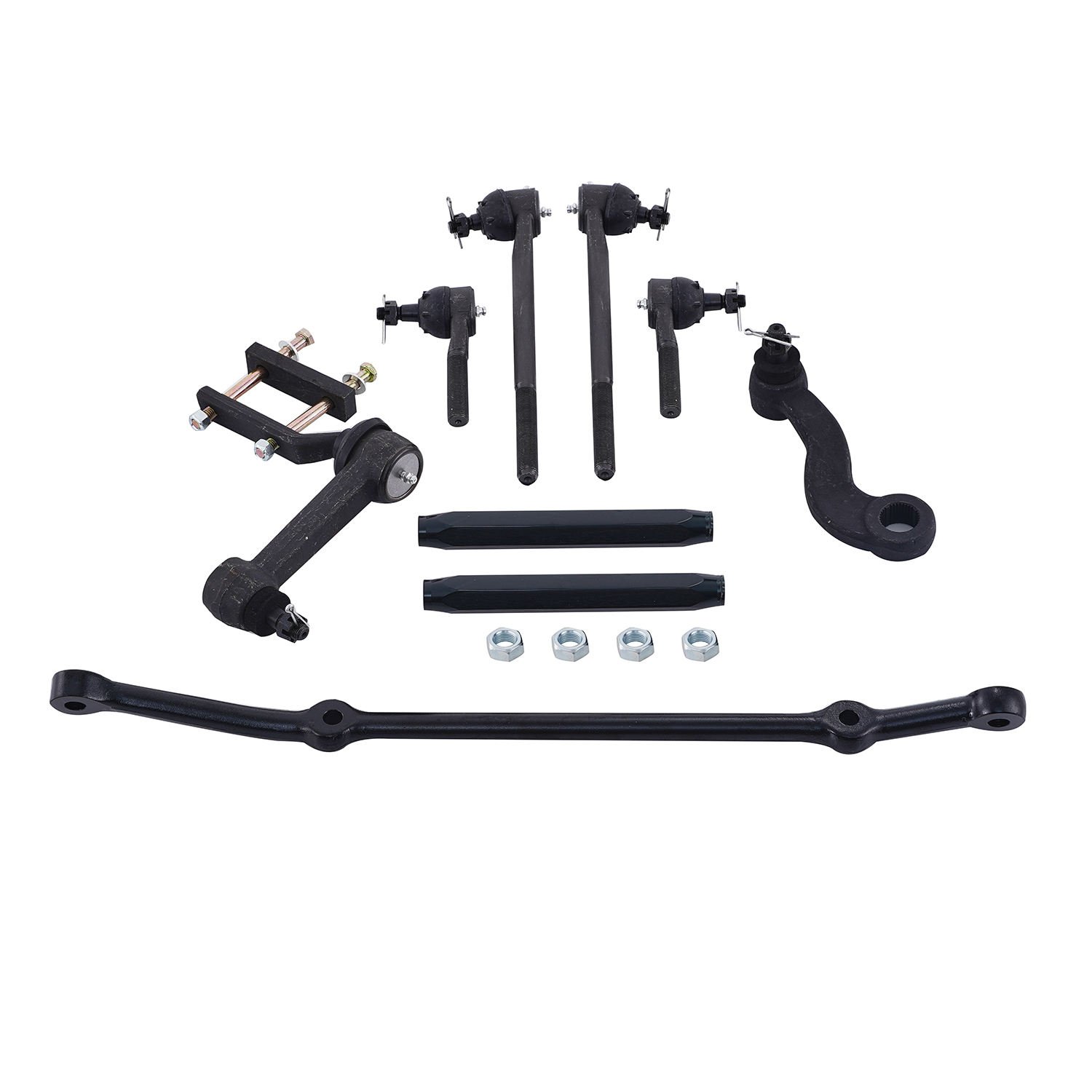
Before we talk brands, let’s make sure we’re on the same page about what you’re actually buying. A steering linkage kit typically includes some combination of:
| Component | Function |
|---|---|
| Center drag link | Connects pitman arm to idler arm, transfers steering motion |
| Tie rods | Connects steering knuckle to opposite side, sets toe angle |
| Tie rod ends | Ball joints at each end of tie rods |
| Idler arm | Supports the drag link on the passenger side |
| Pitman arm | Connects steering gear to drag link (often separate) |
Kits range from complete systems with every component to partial kits that just cover the drag link and tie rods. Know what your vehicle needs before ordering.
What Makes a Good Steering Linkage Kit?
Here’s where most buyers get lost—trying to figure out what actually matters versus what’s just marketing fluff.
Build quality matters more than branding. Some budget kits have garbage ball joints regardless of who assembled them. Some premium brands have components that have been tested in racing for decades.
Adjustability is worth paying for. If you’re doing any suspension modification—lift, lowering, alignment correction—adjustable linkage components let you dial in the geometry. Fixed-length components assume stock geometry and don’t accommodate changes.
Materials and heat treatment matter. For high-stress applications (racing, heavy loads, off-road), the difference between properly heat-treated components and cheap castings is the difference between parts that last and parts that fail at the wrong moment.
The Brands That Actually Deliver
Here’s the honest breakdown of steering linkage brands based on real-world performance and community feedback:
For Street Performance and Daily Driving
Moog
Moog makes solid, reliable linkage components that balance quality and price. Their tie rod ends and drag links are direct-fit replacements that typically outlast the stock parts they replace. Best for: people replacing worn factory components with something better without breaking the bank.
Dorman
Dorman’s steering linkage lineup has improved significantly over the years. Their parts are typically direct OE replacements at reasonable prices. Not always the highest quality, but reliable enough for most street applications. Best for: budget-conscious repairs where you need to replace worn parts without custom work.
AC Delco / GM OE
If you’re working on a GM vehicle, AC Delco or factory GM parts are solid choices. Same material and construction as what came on the vehicle. Best for: GM vehicles under warranty or people who want OE quality with OE fitment.
For Performance and Racing Applications
Uniball / Mechatronics
Un heim joint style linkage is the go-to for serious racing applications. Uniball makes spherical bearings that replace traditional rubber bushings—zero deflection, precise steering feedback, and the ability to handle extreme loads. Best for: dedicated race cars where performance trumps comfort.
Alloy USA / G2 Axle & Gear
These brands make heavy-duty steering linkage designed for off-road and racing use. Alloy USA’s DOM tubing and heim joint setups handle serious abuse without flexing. Best for: Jeeps, buggies, rock crawlers, and anything that sees serious terrain or hard driving.
Rough Country / Skyjacker
For lifted trucks and SUVs, these brands make linkage kits designed specifically for the geometry changes that come with suspension lifts. They include the necessary correction components to maintain proper steering angles. Best for: lifted daily drivers and off-road trucks that still see street use.
For Show Cars and High-End Builds
Chroma / Speedway Motors
Speedway makes precision steering components with tight tolerances and premium finishes. Their linkage is designed for circle track and road race cars where everything needs to be exact. Best for: dedicated race cars and high-end restorations where quality and precision are the priority.
Aldan American
Aldan focuses on adjustable suspension and steering components with quality construction. Their adjustable tie rods and drag links are solid for custom builds where you need to set geometry exactly. Best for: custom builds, hot rods, and show cars with performance intent.
What to Actually Avoid
Not everything in the steering aisle is worth buying. Here’s what to skip:
| Product Type | Why Avoid |
|---|---|
| No-name universal kits | Fitment is often questionable, quality varies wildly |
| Extremely cheap tie rod ends | Ball joints wear out fast, catastrophic failure risk |
| Fixed-length kits for lifted vehicles | These assume stock geometry and don’t correct for lift |
| Kits with only one end adjustable | You need adjustment on both sides for proper alignment |
The money you save buying budget parts is nothing compared to what a failed component costs in repairs, towing, or—worst case—an accident.
How to Choose the Right Kit for Your Application
Not every kit fits every situation. Here’s a quick decision guide:
| Your Situation | Recommended Type |
|---|---|
| Replacing worn factory parts | Quality OE-style kit (Moog, Dorman, AC Delco) |
| Lifted truck or SUV | Lift-specific kit with geometry correction |
| Off-road/rock crawling | Heavy-duty heim joint setup |
| Circle track/racing | Adjustable, precision-built components |
| Street performance | Reinforced street kit with adjustable components |
| Show car/build | Chrome or polished components with quality construction |
Things That Are Worth Spending Extra On
Some components are worth paying more for:
Adjustable tie rods. The ability to set your own toe without cutting and welding is worth the extra cost.alignment changes become simple instead of a fabrication project.
Quality heim joints. If you’re doing any serious performance use, replace the rubber bushings with heim joints. They cost more, require periodic maintenance, but they don’t deflect under load.
Integrated dust boots. Keep debris out of the ball joints. Debris in = joint wear = premature failure.
Professional bushing compounds. If you’re going with traditional bushing-style linkage, polyurethane bushings last longer than rubber in performance applications. Don’t cheap out here.
FAQ
Q: Can I just replace the parts that are bad instead of buying a complete kit?
A: You can, but it’s often false economy. If one component is worn out, the others—especially if they’re the same age—are usually close behind. Buying a kit and replacing everything at once means one job, one alignment, and components that are all fresh together.
Q: Do I need an alignment after installing new steering linkage?
A: Yes, 100%. Any steering linkage change affects wheel alignment geometry. Budget for a professional alignment afterward—it’s not optional.
Q: Are universal steering linkage kits any good?
A: Generally, no. Universal kits assume you’ll cut and weld to make them fit. That’s not ideal for steering components where exact positioning matters. Direct-fit kits are almost always better for street applications.
Q: How long do steering linkage components last?
A: Quality components with proper installation and maintenance can last 100,000+ miles. Heavy use (off-road, racing, hauling) shortens that. Worn ball joints, torn boots, or visible deflection means replacement time.
Q: Should I upgrade my steering linkage when installing a suspension lift?
A: Yes, in most cases. A suspension lift changes your steering geometry, and standard linkage may not accommodate those changes. Lift-specific linkage kits are designed to correct for the geometry changes, maintaining proper steering angles and preventing issues.
Q: What’s the difference between budget and premium steering linkage?
A: Quality of materials, precision of manufacturing, and design features. Premium components use better steel, tighter tolerances, heat treatment for strength, and features like adjustable lengths or greasable joints. Budget parts work for stock replacement but struggle under performance loads.
Where to Buy a Where to Buy a Steering Linkage Kits?
If you’re looking for a reliable supplier, it’s important to choose a manufacturer that offers:
- Stable product quality
- Consistent supply
- Wholesale support
- OEM branding options
For bulk orders or reseller inquiries, you can check this product page:
If you’re looking for a reliable supplier, it’s important to choose a manufacturer that offers:
- Stable product quality
- Consistent supply
- Wholesale support
- OEM branding options
For bulk orders or reseller inquiries, you can check this product page: