
How to Change Motor Mounts on a Chevy Silverado 4×4: Complete DIY Guide
If you’ve been noticing excessive engine vibration, clunking sounds when you accelerate or decelerate, or visible cracking and deterioration on your motor mounts, it’s time to think about replacement. Motor mounts on the Chevy Silverado—especially on 4×4 models—are known for wearing out, and when they go, they affect everything from ride comfort to drivetrain alignment.
The good news? Changing motor mounts on a Silverado 4×4 is a job you can tackle in your driveway with basic tools and a willingness to get dirty. This guide walks you through the entire process for 1999-2018 Silverado models and their GMC Sierra twins, with tips specific to the 4×4 configuration that makes this job unique.
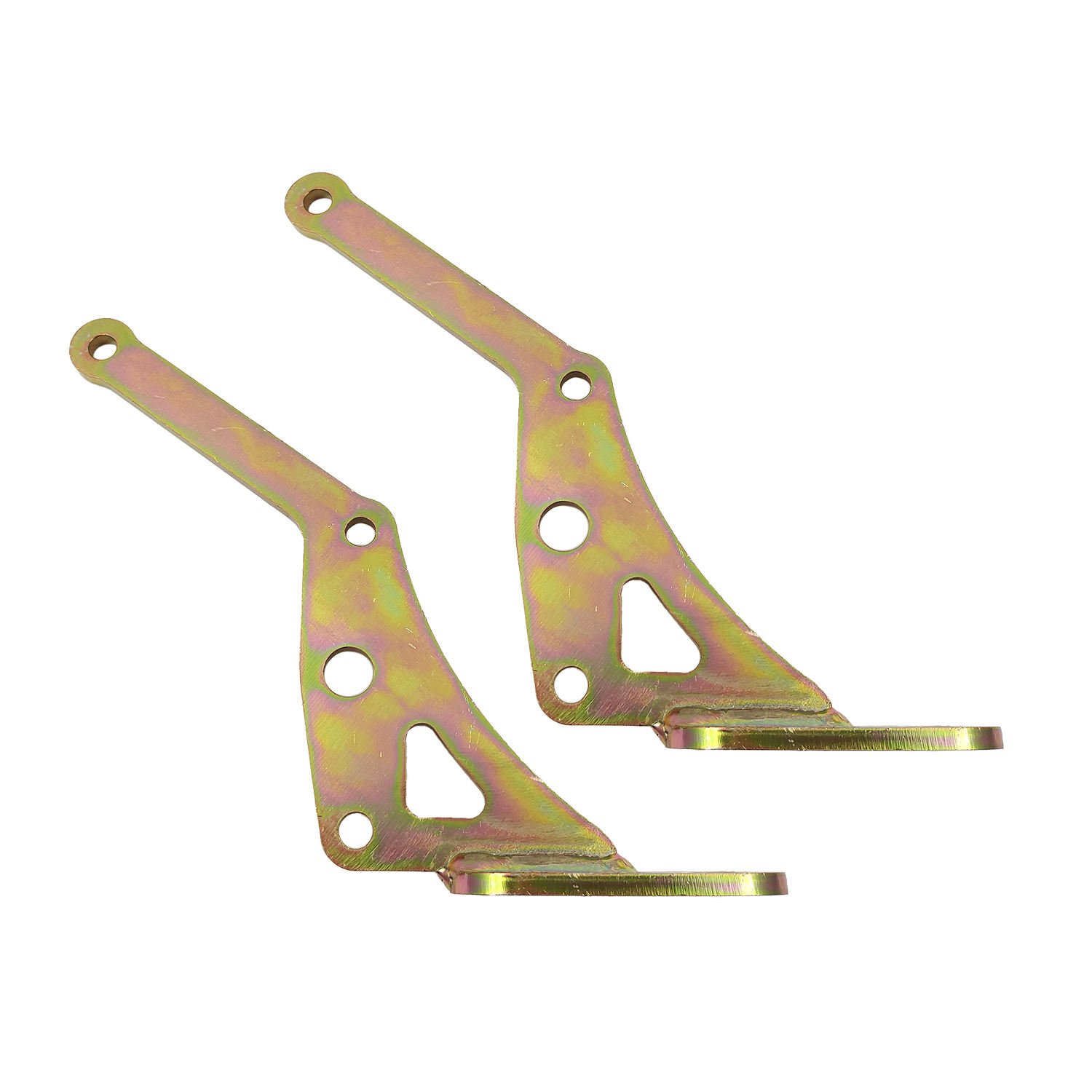
Understanding Motor Mounts on Your Silverado 4×4
Before diving into the replacement process, let’s cover what motor mounts actually do and why the 4×4 configuration adds complexity to the job.
What Motor Mounts Do
Motor mounts serve three critical functions in your Silverado. First, they secure the engine and transmission assembly to the frame, keeping everything stationary under the hood. Second, they absorb vibrations from the powertrain, preventing those vibrations from transferring into the cab and causing an uncomfortable ride. Third, they allow controlled movement—during acceleration, braking, and suspension travel, the drivetrain shifts position, and the mounts let it move while keeping everything properly located.
Your Silverado typically has four motor mounts: two on the left side (driver’s side) at the front of the engine, one on the right side (passenger’s side) supporting the front of the engine, and one or two at the rear supporting the transmission. The exact configuration depends on your model year and whether you have the extended cab, crew cab, or standard cab.
Why 4×4 Adds Complexity
The 4×4 Silverado has additional components that complicate motor mount replacement. The front differential lives in the front axle assembly, positioned between the frame rails and directly beneath where you need to work on the passenger’s side motor mount. On some models, the front driveshaft and associated hardware further restrict access. The 4×4 vacuum actuation system and front axle actuator also occupy space in the engine bay that complicates tool positioning.
On 2WD models, the passenger’s side motor mount is relatively accessible from above. On 4×4 models, you’re often working around the front differential and axle assembly, which means more contortion and occasionally removing components just to gain access.
Signs Your Motor Mounts Need Replacement
How do you know when it’s time to replace the motor mounts? Watch for these symptoms:
Excessive vibration that wasn’t there before often indicates failed or deteriorating mounts. When the rubber compounds break down, they lose their vibration-dampening properties.
Clunking or banging noises when you accelerate hard, come to a stop, or hit a bump. The engine movement that should be controlled by the mounts is instead allowing metal-to-metal contact.
Visible deterioration of the mount itself—cracked, split, or missing rubber sections, oil-soaked mounts (automatic transmission fluid deteriorates rubber compounds), or physical movement you can see when revving the engine.
Engine movement that’s obvious to the eye—when you rev the engine, you can see the entire powertrain shifting significantly, indicating the mounts have completely lost their load-bearing capability.
Transmission mount symptoms are often confused with motor mount issues. If you feel vibrations primarily through the gearshift or notice excessive transmission movement, check the transmission mount separately from the engine mounts.
Tools and Materials Needed
Gather everything before you start. Nothing is more frustrating than getting halfway through the job and realizing you’re missing a critical tool.
Hand Tools
You’ll need a complete socket set, both metric and standard—your Silverado uses a mix depending on the year and specific components. Most mounting bolts use 13mm, 15mm, 18mm, and sometimes 21mm sockets. A breaker bar or long-handled ratchet provides the leverage needed for stubborn bolts, especially the through-bolts that hold the mounts.
Wrenches in matching sizes are essential for bolts where sockets won’t fit. An adjustable wrench helps for those awkward positions. Several different screwdrivers (both Phillips and flathead) handle any remaining fasteners, and a set of pick tools or dental picks helps with clips and seals.
For prying, have several sturdy pry bars available. You’ll need them to lift the engine during mount removal and installation.
Lifting and Supporting Equipment
A hydraulic floor jack with a minimum 2-ton capacity is necessary for lifting the engine. You’ll also need jack stands—never work under a vehicle supported only by a jack. Wood blocks (2x4s or similar) protect the oil pan when you place the jack under it. Some mechanics prefer a dedicated engine support bar that bridges across the engine bay and bolts to the cylinder head studs, allowing you to lift the engine without putting pressure on the oil pan.
Specialty Tools
A motor mount press tool makes installing the new mounts significantly easier, though this isn’t strictly required—you can use a few bolts, nuts, and washers to draw the mount into place. Penetrating oil helps for any bolts that have been in place for years. Thread locker (medium-strength for most bolts) ensures your reassembly stays secure.
Parts Needed
Obviously, you’ll need replacement motor mounts. Get the correct ones for your specific Silverado model year and engine. Motor mounts vary between the 4.3L V6, 4.8L, 5.3L, 6.0L, and 6.2L V8 engines, and between 2WD and 4×4 configurations. Check if your Silverado has the standard or heavy-duty (HD) suspension package—the HD trucks often use different mounts.
While you have everything apart, consider replacing all four mounts at once. If one has failed, the others aren’t far behind, and labor is the same whether you do one or all four. Also grab new mounting bolts if yours are corroded or damaged—hardware is cheap compared to doing this job twice.
Step-by-Step Motor Mount Replacement Process
Let’s get into the actual procedure. We’ll cover the driver’s side mount first, then the passenger’s side, then the transmission mounts. The general process is similar for all positions, but each location has its own quirks.
Preparation: Safety First
Park your Silverado on a level, solid surface. Concrete pavement or a well-maintained gravel lot works. Jack stands need solid footing. Apply the parking brake and block the rear wheels to prevent any movement.
If your engine has been running, let it cool down completely. Components are easier to handle when they’re not hot, and you won’t risk burns.
Step 1: Remove Components for Access
On the driver’s side, start by removing the battery and battery tray. The battery sits directly over the front motor mount, and you’ll need the working room. Disconnect the negative battery terminal first—always start with the negative side when disconnecting electrical components.
Remove any wires, cables, or hoses that route near the motor mount area. Note their positions as you disconnect them; take photos with your phone for reference during reinstallation.
For the passenger’s side mount (4×4 models specifically), you’ll likely need to remove the front wheel and inner fender liner. This is a significant access advantage—many mechanics consider this the “easy way” to reach the passenger’s mount on these trucks. Remove the wheel, then pull out the plastic push fasteners holding the fender liner, and fold it out of the way. You now have direct access to the mount through the wheel well.
Step 2: Support the Engine
This step is critical and should not be skipped. Before removing any motor mount bolts, support the engine’s weight using a jack and wood block under the oil pan. Place the wood between the jack and the pan to prevent damage. The oil pan’s structural integrity varies by design—some are quite strong, others relatively thin. Using a wide board distributes the load across a larger area.
Alternatively, use an engine support bar that bolts to the cylinder head studs and provides a stable support point. Some mechanics prefer the floor jack method; others swear by the support bar. Either works; use what you have available.
Lift the engine just enough to take pressure off the mounts—not so high that you’re straining components. You want the engine supported but still close to its normal position.
Step 3: Access the Motor Mount Bolts
On the driver’s side, look down from above to see the mount. You’ll typically find three bolts securing the mount to the frame (below the mount) and three or four bolts attaching it to the engine (above the mount). The exact number varies by model year and whether you have a V6 or V8.
The bolts on the engine side are often difficult to access. A wobble socket (a socket with a universal joint built in) is extremely helpful here. Standard sockets and extensions may not fit in the tight space.
On the passenger’s side (accessed through the wheel well), you’ll see the mount positioned between the frame rail and the engine block. The front differential sits nearby but shouldn’t interfere directly with mount removal if you’re careful.
Step 4: Remove the Through-Bolt
Every motor mount has a through-bolt—a long bolt that passes through the mount body and connects the engine portion to the frame portion. This bolt takes the engine’s load and is often under significant tension from the weight it’s supporting.
Have a helper apply slight upward pressure on the engine (using the jack) while you remove the through-bolt. The engine’s weight tries to compress the mount, and that compression makes the through-bolt difficult to extract. With the engine lifted slightly, the through-bolt becomes much easier to remove.
If the through-bolt resists, don’t force it. Apply penetrating oil and let it soak for 15-20 minutes. Check that the engine is adequately supported and lifted slightly—sometimes the bolt is tight simply because the mount is still compressed.
Step 5: Remove the Mounting Bolts
With the through-bolt out, remove the remaining bolts securing the mount. Start with the bottom bolts (frame side) if accessible, then move to the top bolts (engine side). Work methodically, keeping track of which bolt came from where—they’re often different sizes and lengths.
Some bolts may be corroded or seized. Apply penetrating oil and wait. Forced extraction risks rounding off bolt heads or breaking bolts off entirely. If a bolt breaks, you’re now dealing with a much more complicated extraction process.
Step 6: Remove the Old Mount
Once all bolts are removed, the mount should come free. On some positions, particularly the passenger’s side mount on 4×4 models, you may need to lift the engine slightly higher to create clearance for mount removal. The mount has some play in its design, but there’s a limit to how much the drivetrain can move.
If the mount is stuck or stubborn, don’t hammer on it. Apply penetrating oil around the edges and work it free with gentle prying. The mount’s metal bracket can be pried against the frame or engine block carefully.
Inspect the mounting surfaces while the mount is out. Clean any accumulated grime, oil, or debris. Check the frame mounting points and engine block surfaces for corrosion or damage that might prevent the new mount from sitting flush.
Step 7: Install the New Motor Mount
Position the new mount in place. It should fit without forcing—if it doesn’t fit easily, double-check you’ve got the correct mount for your application. The mount has a specific orientation; there’s usually a “TOP” marking or the studs/bolt holes are positioned for only one correct installation.
For the frame side, install the bolts that attach the mount to the frame first. These are often easier to access and help hold the mount in position. Torque these to specification—typically 35-45 ft-lbs for most Silverado motor mount bolts, but check your specific application.
The engine-side bolts are trickier. With the engine still supported by the jack or support bar, lower it slightly so the mount’s engine bracket seats against the block. Start the bolts by hand to avoid cross-threading, then torque to spec. If you can’t access the bolts with the engine in its normal position, lift the engine slightly to create working room.
Install the through-bolt last. It should pass through the mount body and thread into the frame bracket. Tighten this bolt after all other mounting bolts are secure. Torque to specification—typically 50-65 ft-lbs for through-bolts.
Step 8: Repeat for Other Mounts
Move to the next mount position and repeat the process. Most mechanics recommend replacing all four mounts at once, even if only one has failed. Here’s why: the remaining mounts are almost certainly deteriorated, and doing all four now means you won’t be doing this job again in six months when the next mount fails.
The transmission mounts (rear position) are often easier to access from below the truck. With the vehicle on jack stands, work from underneath to remove and install these mounts. The process is similar: support the transmission or crossmember, remove bolts, replace mount, reinstall bolts.
Step 9: Final Assembly
With all mounts installed, verify everything is torqued to specification. Check that all bolts are present and secure. Reconnect any wires, cables, or hoses you disconnected earlier, using your photos as reference.
Reinstall the battery tray and battery. Reconnect the battery terminals—positive first, then negative. On 4×4 models, reinstall the inner fender liner and wheel.
Step 10: Initial Startup and Verification
Before putting the truck back in service, start the engine and let it idle for several minutes. Watch and listen carefully:
Excessive vibration that seems worse than before suggests a mount isn’t seated properly or wasn’t torqued correctly.
Metallic clunking during engine movement indicates a loose connection somewhere in the mount assembly.
Engine movement that’s obvious to the eye when you rev the engine suggests the mount didn’t seat correctly or a bolt is loose.
Let the engine reach operating temperature, then check for any fluid leaks around the new mounts. Also verify that the transmission shifts smoothly and the drivetrain feels normal during test driving.
Take a short test drive, paying attention to how the truck feels. Accelerate moderately and brake hard to load the mounts. Turn in both directions while moving to stress the drivetrain mounting system. If everything feels solid with no new noises or vibrations, you’re good to go.
Tips for Success with Your Silverado 4×4
These tips come from mechanics who’ve done this job many times on Silverado and Sierra trucks. Use them to avoid common pitfalls.
Access Tip for 4×4 Models
On 4×4 models, removing the passenger’s wheel and inner fender liner provides dramatically better access to that motor mount. What might be a frustrating 30-minute struggle from above becomes a straightforward 10-minute job when you can work through the wheel well. Don’t skip this step.
Handling Stubborn Through-Bolts
The through-bolts often seize in their bushings. When this happens, applying penetrating oil directly to the bushing (where the bolt passes through) can help. Let it soak while the engine is supported. Sometimes heating the bolt with a propane torch (carefully, avoiding any surrounding components) causes enough thermal expansion to break the seized connection.
If a through-bolt breaks, you have a problem. Broken bolt extraction requires specialized tools and significant time. Prevent this by not forcing bolts, using penetrating oil liberally, and never using excessive force.
Working with Corroded Bolts
Silverado trucks—especially those driven in areas with winter road salt—accumulate corrosion on undercarriage bolts. Before fighting a stubborn bolt, apply penetrating oil and let it work for at least 15 minutes. If it’s still stuck, apply more penetrating oil and use a breaker bar rather than forcing a regular ratchet.
For bolts that simply won’t budge, consider the possibility of drilling and tapping for an easy-out extractor. This destroys the bolt but gets you out of a jam. It’s a skill worth having in your toolbox.
When to Use an Engine Support Bar
An engine support bar (sometimes called a support bridge) bolts to the cylinder head studs and provides a stable point to lift the engine. This keeps pressure off the oil pan and provides more precise control over engine height. While you can use a jack under the oil pan, the support bar is a cleaner solution, especially if you need extended working time with the engine lifted.
Many auto parts stores rent these tools if you don’t want to buy one.
Don’t Forget the Transmission Mount
Transmission mounts on the Silverado often fail before the engine mounts, especially on trucks with automatic transmissions. The transmission mount controls the transmission’s position and angle, and a failed mount can cause hard shifting, drivetrain vibration, and accelerated U-joint wear. When you’re doing the motor mounts, budget for replacing the transmission mount as well—it’s usually easier to do while everything is accessible.
Common Mistakes to Avoid
Amateur mechanics make predictable mistakes on this job. Here’s what to avoid.
Not adequately supporting the engine before removing mount bolts. An unsupported engine is dangerous and can cause serious injury. Support the engine before loosening any mount bolts.
Overlooking the 4×4-specific components. On 4×4 models, the front differential and related hardware can obstruct mount removal. Don’t assume the 2WD procedure applies directly—take time to assess what’s in the way before forcing anything.
Forgetting to reconnect components. Battery cables, ground straps, wiring harness connectors, and vacuum lines routed near the motor mounts are easy to overlook during reinstallation. Photograph everything before disassembly.
Using the wrong motor mounts. Silverado motor mounts differ between model years, engine sizes, and 2WD/4×4 configurations. Verify you have the correct parts before starting. Autozone, O’Reilly, and other parts stores can look up your specific application—use your VIN if possible.
Reusing old hardware. Bolts that were corroded, stretched, or damaged during removal should be replaced. Hardware is inexpensive compared to the labor of doing this job twice because a bolt broke on your first drive.
Skipping the torque specifications. The mounting surfaces need to be flat and the bolts properly torqued. Over-torquing can warp the mount’s mounting flange; under-torquing allows the mount to shift and fail prematurely. Use a torque wrench and follow specifications.
When to Call a Professional
While this job is DIY-feasible, certain situations warrant professional help.
If bolts break off during removal, you need specialized extraction tools and experience. A broken bolt in an engine mount location isn’t a beginner repair.
If the frame mounting points are rusted or damaged, the mount can’t be secured properly. Frame repair is beyond most DIY capabilities.
If you lack the tools (engine support bar, proper sockets, torque wrench), professional installation might be more cost-effective than buying tools you’ll use once.
If the job takes longer than expected and you’re getting frustrated, professional help is better than rushing and making mistakes.
Labor costs for motor mount replacement typically run $200-400 in shop labor, depending on your region and the shop. If you value your time at more than that rate, professional installation makes economic sense. If you enjoy the work and want to save money, tackle it yourself with this guide.
Maintenance and Prevention
Motor mounts don’t require regular maintenance—they’re designed to be “install and forget” until they fail. However, certain practices can extend their life.
Avoid excessive engine revving when stationary. Holding the throttle at high RPM while the vehicle is stationary stresses the motor mounts unnecessarily. Occasional revving for maintenance purposes is fine; prolonged engine loading through the mounts while the truck doesn’t move accelerates mount wear.
Address oil leaks promptly. Motor mounts are rubber components, and oil (especially automatic transmission fluid, which is notorious for this) deteriorates rubber compounds. An oil leak that’s allowed to saturate a motor mount will destroy it much faster than normal operation.
Consider upgraded mounts if you use your truck for heavy towing or off-road use. Aftermarket motor mounts with stiffer compounds or hydraulic damping are available. These cost more than standard replacement mounts but handle demanding use better.
Check mount condition during other undercarriage work. If you’re under the truck for an oil change, brake job, or any other service, take a moment to glance at the motor mounts. Catching deterioration early prevents unexpected failures.
FAQ: Common Questions About Silverado Motor Mounts
Q: How long do motor mounts last on a Chevy Silverado?
A: Typical motor mount life on Silverado trucks ranges from 80,000 to 150,000 miles, depending on driving conditions and usage. Trucks used for heavy towing, frequent heavy loads, or aggressive driving may see earlier failure. Trucks driven gently and maintained well often go beyond 150,000 miles on original mounts.
Q: Can I replace just one motor mount?
A: Technically yes, but practically no—you should replace all mounts at the same time. If one mount has failed, the others are likely deteriorated as well. They’re all subjected to the same conditions and have similar wear patterns. Replacing only one means you’ll likely be doing this job again soon when the next mount fails.
Q: What’s the difference between standard and heavy-duty motor mounts?
A: Heavy-duty (HD) mounts use stiffer rubber compounds and stronger internal components to handle greater loads. Silverados with the HD suspension package (often found on 2500 and 3500 models, and sometimes as an option on 1500 models) use HD motor mounts. The difference matters—standard mounts on a heavy-load truck fail faster, and HD mounts on a lightly loaded truck provide a harsher ride than necessary.
Q: My truck has a vibrating steering wheel at idle—is this a motor mount problem?
A: Possibly, but not necessarily. Motor mount failure causes various vibration symptoms. However, steering wheel vibration at idle can also stem from worn engine accessories (alternator, power steering pump), unbalanced drivetrain components, or transmission issues. Have the truck diagnosed properly before assuming motor mounts are the culprit.
Q: Can I drive my Silverado with a bad motor mount?
A: Short distances, yes. Long-term, no. A failed motor mount allows excessive engine movement, which stresses other components including the driveshaft, U-joints, transmission, and even body mounts. The clunking and vibration are annoying and progressively damage other parts. Replace motor mounts as soon as you can reasonably schedule the repair.
Q: Should I use OEM or aftermarket motor mounts?
A: Both options work. OEM mounts from GM (often sold under the ACDelco brand) are guaranteed to fit and perform to factory specifications. Quality aftermarket mounts from reputable brands (Dorman, MOOG, Mopar, etc.) often match or exceed OEM quality at a lower price. Avoid the cheapest aftermarket options—rubber compound quality varies, and poor rubber fails faster.
Q: Do I need an alignment after replacing motor mounts?
A: Not usually, but it depends. Motor mount replacement shouldn’t affect wheel alignment—the mounts locate the engine and transmission, not the wheels. However, if the old mounts allowed significant engine movement, the drivetrain alignment may have shifted over time. Most mechanics recommend a drivetrain inspection (checking U-joint angles, driveshaft balance, and transmission alignment) after major mount replacement, with an alignment check if anything seems off.
Where to Buy a Where to Buy a Chevy Motor Mount?
If you’re looking for a reliable supplier, it’s important to choose a manufacturer that offers:
- Stable product quality
- Consistent supply
- Wholesale support
- OEM branding options
For bulk orders or reseller inquiries, you can check this product page:
If you’re looking for a reliable supplier, it’s important to choose a manufacturer that offers:
- Stable product quality
- Consistent supply
- Wholesale support
- OEM branding options
For bulk orders or reseller inquiries, you can check this product page: