
Oil Restrictors: The Little Devices That Keep Your High-RPM Chevy Engine From Eating Itself
So you’ve got a small block Chevy that spins past 7,000 RPM, and someone’s told you that you need oil restrictors. Maybe you nodded along and ordered them without actually knowing what they do. Or maybe you’re just curious why these little CNC-machined discs cost what they cost and what you’re supposed to do with them.
Fair questions. Let’s demystify this thing.
Why Does High RPM Even Matter for Oiling?
Here’s the physics problem nobody talks about until it’s too late. At low RPM, your oil pump pushes oil up through the galleries, and gravity helps it drain back down. Simple, effective, works fine for 95% of driving.
But when you start spinning that engine hard—track days, racing, whatever—you introduce a problem: centrifugal force.
All that oil getting pumped to the top of the engine? At high RPM, centrifugal force pushes it outward, away from where you want it. The oil gets thrown against the cylinder head walls, accumulates there, and suddenly your oil pan is running dry at the pickup while there’s still plenty of oil stuck to everything up top.
This is how engines starve for oil at exactly the moment they need it most—high RPM, maximum load, maximum heat. Bad news.
What Do Oil Restrictors Actually Do?
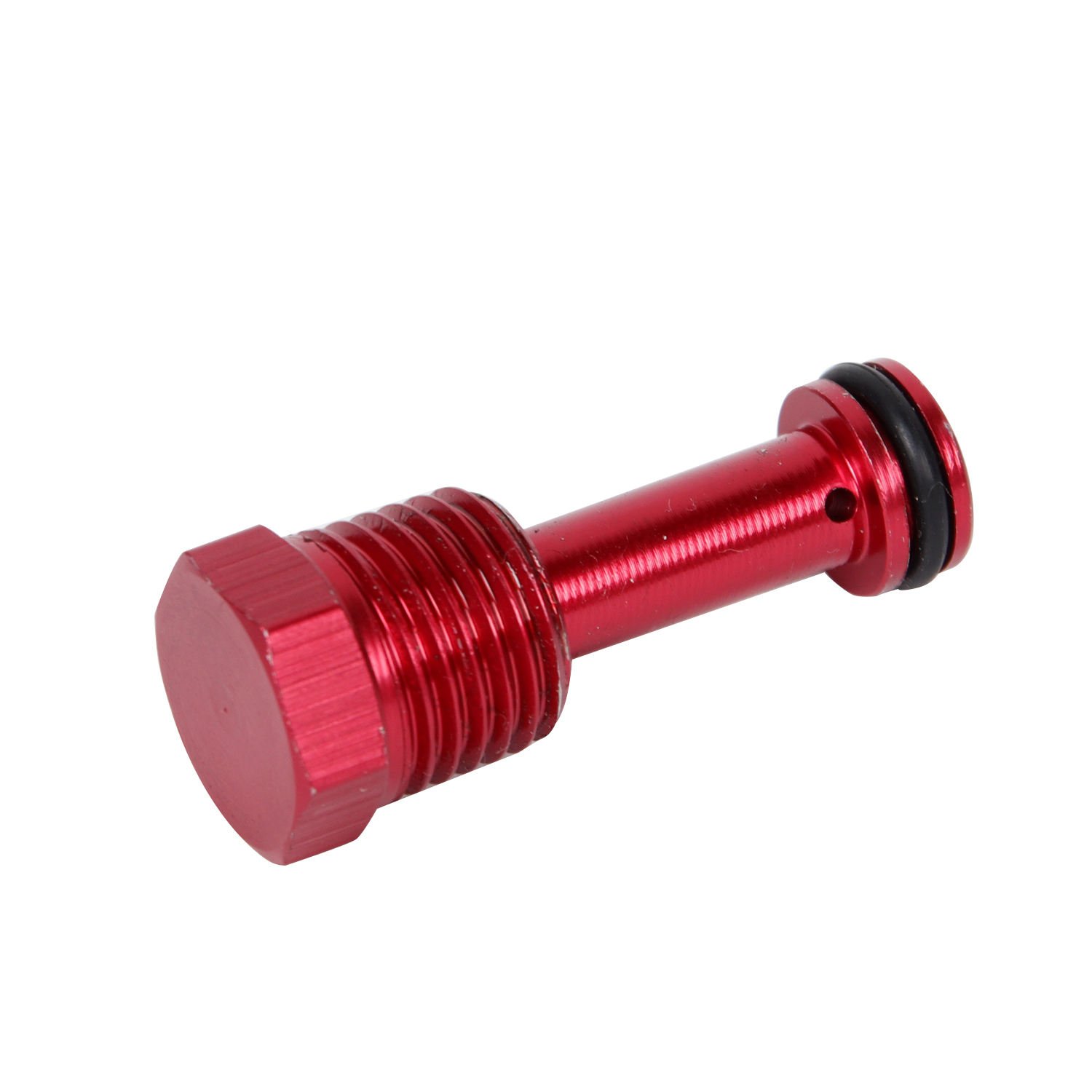
An oil restrictor goes in the oil gallery that feeds the top end—the path to your valvetrain, lifters, and cam. The restrictor is just what it sounds like: it restricts how much oil can get through.
By limiting flow to the top, you do two things:
- You keep more oil in the pan. Less oil getting thrown up top means more staying where it belongs, available at the pickup tube.
- You redirect oil to the bottom. More oil goes to the main bearings and rod bearings—the parts that really matter under high load.
It’s a tradeoff. The top end gets slightly less oil pressure, but the bottom end stays fed. For a race engine, that’s absolutely the right call.
The KAROX Oil Restrictors in Particular
These are CNC-machined from billet aluminum—a solid chunk of aluminum cut and shaped on a machine, not cast and hope. That means tight tolerances, consistent performance, and durability that won’t quit on you mid-race.
The specs:
| Detail | Measurement | Why It Matters |
|---|---|---|
| Orifice Diameter | 0.0625″ (1/16″) | This is the flow restriction—bigger would let too much through |
| I.D. Hole | 0.055″ | The actual passage oil flows through |
| Sealing | O-ring style | Clean seal that won’t leak under pressure |
The O-ring sealing is important. Some cheap restrictors just sit there with nothing holding them in place. These have an O-ring groove machined in, so when you bolt them in, you’ve got a proper seal. No weeping, no pressure loss.
They come with extra O-ring seals, which is thoughtful. O-rings are cheap to replace, but it’s nice when the manufacturer includes spares.
Who Actually Needs These?
Not every engine builder needs oil restrictors. Here’s the honest breakdown:
You need restrictors if:
- Your engine spins past 6,500-7,000 RPM regularly
- You’re doing any kind of circle track, drag racing, or road racing
- You’ve got a stroker or other high-performance build with increased cylinder pressure
- Your valvetrain is suffering from oil pressure issues at high RPM
You probably don’t need them if:
- It’s a stock rebuild that will never see serious RPM
- You’re building a street cruiser that idles around 2,000 RPM
- Your engine already has a good dry-sump system handling oil pressure
Most performance street builds and all dedicated race builds benefit from restrictors. The only question is orifice size—and that’s a discussion for your engine builder based on your specific combination.
Installation Reality
Installing these isn’t brain surgery, but there’s a right way to do it:
- Find the oil gallery to the top end. This varies by head design, but it’s usually a passages feeding the lifter valley or valvetrain area.
- Remove whatever fitting is currently there. Could be a plug, a plug with a small passage, whatever.
- Install the restrictor with the O-ring in the groove. Make sure it’s seated flat.
- Thread in the retainment. Whatever your head uses to hold it in place—some use a threaded plug, some have a shoulder that seats.
- Check for leaks. Fire up the engine, let it idle, check for weeping at the restrictor.
The direct-fit design means these drop into the existing passages without modifications. That’s the point—upgrade your oiling without redesigning your engine.
What About Oil Pressure?
This is where people get nervous. “Won’t restricting flow hurt my oil pressure?”
The answer is: it depends where you measure.
Down at the main bearings and rod bearings—the bottom of the engine—pressure should stay healthy. That’s the whole point. You’re keeping oil there instead of letting it get thrown away to the top end.
Up at the valvetrain, you might see slightly lower pressure. That’s expected and usually fine. If your valvetrain has hydraulic lifters, they need a minimum pressure to function, but most restrictors are sized to maintain adequate pressure for that.
If your lifter pump-up is suffering or you’re seeing lifter noise at high RPM, your restrictor might be too small, or you might need pressure-fed lifters instead.
The O-Ring Situation
One thing worth mentioning: these include extra O-ring seals. Here’s why that’s actually useful.
O-rings can get damaged during installation if you’re not careful. They can swell from oil exposure over time. They can get old and crack. Having spares means you don’t have to hunt down the right size O-ring when you’re doing maintenance or rebuilds.
The O-ring groove is precision-machined into the restrictor. Using the correct O-ring size matters—don’t substitute something that looks close. The groove is sized for a specific cross-section and diameter. Get the right O-ring or the seal won’t work.
FAQ
Q: Can I run these on a stock street engine?
A: You could, but it’s probably overkill. Stock engines don’t spin high enough to have the oil starvation problem that restrictors solve. Save your money for other maintenance.
Q: What’s the difference between these and a restrictor fitting from the auto parts store?
A: Quality and precision. Cheap aluminum fittings might be cast (inconsistent, can have defects), have imprecise orifices, and no O-ring groove. These are CNC-machined with known, consistent orifice sizes and proper sealing. For a race application, consistency matters.
Q: How do I know what size restrictor I need?
A: That’s a discussion with your engine builder based on your combination. Different cam profiles, valve springs, RPM targets, and oiling systems all factor in. There’s no universal “right” size—it depends on what you’re trying to accomplish.
Q: Can I install these myself?
A: If you’re comfortable working around your engine’s oil passages and know where the top-end feed is, yes. But if you’re not sure what you’re looking at, having a shop do it ensures proper installation and no cross-threaded fittings that could leak or damage threads.
Q: Do these help with oil consumption at high RPM?
A: Indirectly. If oil consumption is caused by oil being thrown into the combustion chamber or out the breathers, restricting flow to the top can reduce that. But if consumption is from worn rings or valve guides, restrictors won’t fix it.
Q: Should I use thread sealant on these?
A: No. The O-ring provides the seal. Thread sealant would interfere with the O-ring’s ability to seal and could damage the O-ring during installation. Just thread it in with the O-ring seated properly.
Where to Buy a Where to Buy a Chevy Oil Restrictors?
If you’re looking for a reliable supplier, it’s important to choose a manufacturer that offers:
- Stable product quality
- Consistent supply
- Wholesale support
- OEM branding options
For bulk orders or reseller inquiries, you can check this product page:
If you’re looking for a reliable supplier, it’s important to choose a manufacturer that offers:
- Stable product quality
- Consistent supply
- Wholesale support
- OEM branding options
For bulk orders or reseller inquiries, you can check this product page: