
How to Make Rod End Bearing: Complete Guide to Construction and Manufacturing
Rod end bearings are critical components in countless mechanical systems, from automotive steering and suspension to aircraft control systems and industrial machinery. Understanding how rod end bearings are made provides valuable insight into why these components must be manufactured to such precise tolerances and why quality matters so profoundly in their function.
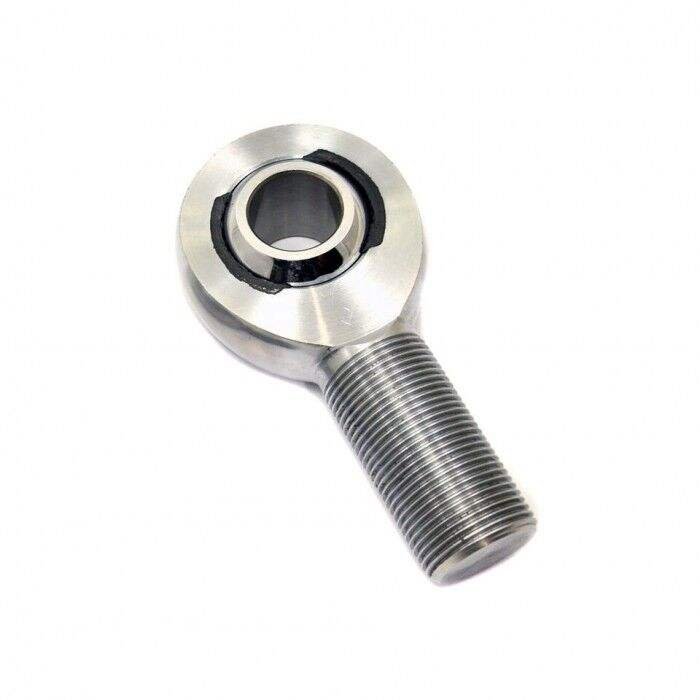
The question “how to make a rod end bearing” encompasses several aspects: understanding the components that constitute a rod end bearing, the materials used in their construction, the manufacturing processes that create precision-machined components, and the assembly procedures that bring everything together. While commercial rod end bearing manufacturing requires specialized equipment and expertise, understanding the process helps you select the right bearings for your application and appreciate the engineering that goes into these seemingly simple components.
This guide provides a comprehensive overview of rod end bearing construction, materials, manufacturing processes, and quality considerations. Whether you’re an engineer specifying components, a machinist interested in bearing manufacturing, or an enthusiast wanting deeper understanding, this guide covers everything you need to know.
Understanding Rod End Bearing Components
Before exploring the manufacturing process, you need to understand what components constitute a rod end bearing and how they function together.
The Basic Structure
A rod end bearing—also called a rod end, heim joint, or spherical bearing—consists of four primary components that work together to provide articulated rotational movement:
The Body (Housing): The main structural component of a rod end bearing is a forged or machined body that provides the connection point to the surrounding mechanical system. The body typically includes a threaded shank on one end (for attachment to a control arm or linkage) and a spherical bearing seat on the other. The body must be strong enough to withstand substantial loads while allowing the bearing to articulate.
The Race (Inner Ring): The bearing race is a precision-machined inner ring that contains the spherical rolling element. The race’s inner surface is machined to exacting tolerances to create a precise spherical cavity that holds the ball or roller. The race must be harder than the ball to prevent wear and maintain dimensional accuracy over extended use.
The Ball or Roller Element: The load-carrying component of a rod end bearing is the spherical ball (in most designs) or cylindrical roller (in some heavy-duty designs). This element bears the load between the inner race and the outer housing, allowing rotation and articulation in any direction within the bearing’s angular capability.
The Shell (Outer Ring): The outer shell provides the bearing’s spherical outer surface that fits into the body’s bearing seat. The shell articulates within this seat, allowing the bearing to swivel while maintaining alignment. Some designs use a separate shell; others integrate the shell into the body as a pressed-in component.
Threaded Connection Types
Rod end bearings use various threaded connection designs depending on the application:
Male Threaded: The shank extends outward with external threads. The bearing attaches to the female thread of a control rod or linkage. Male-threaded rod ends are the most common configuration.
Female Threaded: The shank has internal threads, accepting a male-threaded connecting rod. Female-threaded designs are common in applications where adjustment length is needed.
Weld-On Shanks: Some rod ends have plain shanks designed for welding to fabrications. These are common in custom automotive builds and industrial applications.
Tapered Adapters: Various adapter designs allow rod ends to connect to different thread types or non-threaded connections.
Materials Used in Rod End Bearing Construction
Material selection profoundly affects rod end bearing performance, durability, and cost. Different applications demand different material properties.
Body Materials
Carbon Steel: The most common body material for standard rod end bearings. Medium-carbon steels (like 1045 or 4140) provide good strength and can be heat-treated for improved durability. Carbon steel bodies are suitable for many automotive and industrial applications where corrosion resistance isn’t critical.
Alloy Steel: Higher-grade applications use alloy steels like 4130 or 4340 for improved strength and toughness. These materials handle higher loads and more demanding environments than carbon steel.
Stainless Steel: For applications requiring corrosion resistance, stainless steel bodies (typically 303, 304, or 316 grades) provide excellent resistance to environmental degradation. Stainless steel rod ends are common in marine applications, food processing, and medical equipment.
Aluminum: Lightweight rod ends use aluminum bodies for applications where weight savings matter more than maximum strength. Aerospace and high-performance automotive applications commonly use aluminum rod ends.
Titanium: The premium choice for weight-critical applications, titanium provides excellent strength-to-weight ratio and corrosion resistance. Aerospace and high-end motorsports commonly use titanium rod ends.
Bearing Element and Race Materials
Chrome Steel: The standard material for bearing balls and races. Through-hardened chrome steel (typically AISI 52100) provides excellent hardness, wear resistance, and load capacity. Most rod end bearings use chrome steel balls and races.
Stainless Steel: For corrosion-resistant applications, stainless steel bearing elements (typically AISI 440C) provide the hardness and wear resistance needed while resisting environmental degradation.
Silicon Nitride: Advanced ceramic hybrid bearings use silicon nitride balls with steel races. These provide benefits including reduced weight, higher speed capability, and corrosion resistance. High-performance motorsports and aerospace applications use ceramic hybrids.
Surface Treatments and Coatings
Hard Chrome Plating: Provides corrosion resistance and a hard, wear-resistant surface. Common on rod end bodies and shanks.
Zinc Plating: Provides basic corrosion protection for standard applications. Economical but less durable than chrome or specialized coatings.
Black Oxide: Provides mild corrosion resistance and a dark appearance. Common on lower-cost industrial bearings.
Nickel Plating: Offers good corrosion resistance and a bright finish. Used in applications where aesthetics matter.
PTFE/Teflon Coatings: Some rod ends feature PTFE or other dry-film lubricants on bearing surfaces for reduced friction and improved articulation.
Manufacturing Processes for Rod End Bearing Components
Understanding how rod end bearings are made requires examining each component’s manufacturing process.
Body Forging and Machining
The body begins as forged metal, typically from bar stock or pre-formed forgings:
Forging: For high-strength applications, the body is hot-forged or cold-forged into a near-net shape. Forging aligns the metal’s grain structure along the component’s contours, improving strength. The forging process requires expensive tooling but produces superior components.
Machining from Bar Stock: Lower-cost rod ends are machined directly from bar stock or heavy-wall tubing. This process is more economical but doesn’t provide the grain structure benefits of forging.
Thread Rolling: Threads on the shank are typically rolled rather than cut. Thread rolling displaces material rather than removing it, producing stronger threads with better surface finish and faster production.
Bearing Seat Machining: The critical bearing seat (where the shell seats) is machined to very precise tolerances. This surface must be spherical to exacting specifications to ensure proper bearing function. CNC machining with specialized fixtures ensures consistency.
Heat Treatment: After machining, the body is heat-treated to achieve the required hardness and strength. Quenching and tempering processes develop the optimal balance of hardness and toughness for the application.
Inner Race Manufacturing
The inner race is a precision component requiring careful manufacturing:
Bore Machining: The inner race’s bore (where it fits on the connecting rod or housing) is ground to precise diameter. This bore must be concentric with the spherical bearing surface.
Spherical Surface Grinding: The critical bearing surface—the spherical cavity that holds the ball—is ground using specialized spherical grinding equipment. This operation requires extremely precise control to achieve the correct spherical geometry and surface finish.
The spherical surface must be finished to very tight tolerances—typically within a few ten-thousandths of an inch. Surface finish also matters; rougher surfaces increase friction and wear.
Hardening: The race must be harder than the ball it carries. Through-hardening or case-hardening processes achieve the necessary hardness while maintaining toughness in the component’s core.
Ball Element Production
Bearing balls are manufactured separately using a precision process:
Heading: Wire is cut into short slugs that are then cold-headed into rough ball shapes using specialized heading dies.
Flash Removal: The flash (excess material from the heading process) is removed in grinding operations.
Rough Grinding: The balls are ground to approximate size using abrasive wheels or specialized equipment.
Finishing: Multiple grinding and polishing operations bring the balls to final size with precise sphericity. The balls must be perfectly spherical—any deviation creates noise, vibration, and premature wear.
Surface Processing: Final surface processing may include polishing, lapping, or other treatments to achieve the required surface finish and reduce friction.
Inspection: Every ball is inspected for size, sphericity, surface defects, and hardness. Only balls meeting strict specifications proceed to assembly.
Shell (Outer Ring) Manufacturing
The shell provides the bearing’s outer spherical surface:
Machining: The shell is machined from bar stock or tube, creating the basic shape including the spherical outer surface.
Spherical Grinding: Like the inner race, the shell’s spherical surface is ground to precise tolerances. This surface must be concentric with the mounting bore and provide the correct fit with the body’s bearing seat.
Hardening: The shell is heat-treated to achieve appropriate hardness for wear resistance.
Finishing: Final grinding and polishing ensure the correct surface finish and dimensional accuracy.
Assembly Processes
With all components manufactured to specification, assembly brings them together into a functional rod end bearing.
Pre-Assembly Preparation
Before assembly, components undergo thorough cleaning:
Degreasing: All components are cleaned to remove machining oils, cutting fluids, and any contaminants. Solvent cleaning or ultrasonic cleaning ensures surfaces are completely clean.
Inspection: Each component is inspected to verify it meets specifications. Any component outside tolerance is rejected.
Lubrication: Some designs include pre-lubrication with appropriate bearing grease or oil. Others require lubrication during installation.
Ball Insertion and Cage Assembly
Rod end bearing assembly requires careful technique:
Shell Seating: The shell is seated into the body’s bearing seat. In some designs, the shell is pressed in; in others, it’s held by a retaining ring or other retention method.
Race Installation: The inner race is positioned within the shell. Some designs use a snap ring or other retainer to hold the race in place.
Ball Insertion: The ball is inserted into the bearing cavity. Some designs use a cage that holds the ball in position while allowing articulation.
Retention: Various methods retain the ball and race within the bearing assembly: snap rings, c-clips, staking, peening, or other retaining features. The retention must be secure while allowing the required articulation.
Quality Verification: Assembled bearings undergo function testing to verify smooth articulation and proper retention. Any bearing with binding, excessive play, or other defects is rejected.
Types of Rod End Bearings
Different applications require different rod end bearing designs:
Standard Rod Ends
Standard rod end bearings use a one-piece or two-piece design with a spherical bearing surface. The shank threads into or welds to the surrounding structure. Standard rod ends are the most common type for automotive and industrial applications.
Stud-Type Rod Ends
Stud-type rod ends have a stud protruding from the bearing rather than a threaded shank. These thread into a housing or bracket with a female thread. Stud-type rod ends are common in suspension applications where the bearing threads directly into a control arm.
Clevis Rod Ends
Clevis rod ends feature a forked end with a cross hole rather than a threaded shank. These connect to pins or bolts rather than threading into components. Clevis rod ends are common in linkages and control systems.
Adjustable Rod Ends
Adjustable rod ends feature a female thread that accepts a male-threaded connecting rod. These allow length adjustment during installation or maintenance. Common in steering systems and suspension components.
Heavy-Duty and Precision Classes
Rod end bearings are manufactured to different tolerance classes:
Commercial Grade: Standard tolerances suitable for most industrial applications. Economical but with looser tolerances than precision grades.
Precision Grade: Tighter tolerances for applications requiring accurate positioning or minimal deflection. Common in aerospace and high-performance applications.
High-Precision Grade: The tightest tolerances for demanding applications. Used in aircraft control systems and precision machinery.
Quality Control and Testing
Rod end bearing manufacturers implement extensive quality control:
Dimensional Verification
Every critical dimension is verified during and after manufacturing:
- Thread pitch and diameter
- Shank diameter and length
- Bearing seat diameter and sphericity
- Overall length and geometry
- Ball diameter and sphericity
Material Verification
Material certificates verify that materials meet specifications:
- Material grade and composition
- Heat treatment hardness
- Tensile strength and yield strength
Functional Testing
Assembled bearings undergo function testing:
Articulation Testing: Bearings are actuated through their full range of motion to verify smooth operation without binding.
Breakaway Torque Testing: The torque required to initiate articulation is measured. Excessive breakaway torque indicates interference or contamination.
Ultimate Load Testing: Samples are tested to destruction to verify they meet rated load specifications.
Fatigue Testing: Accelerated life testing verifies long-term durability under cyclic loading.
Surface Inspection
Surface conditions are verified visually and with specialized equipment:
- No cracks, pits, or surface defects
- Correct surface finish
- Proper coating adhesion and coverage
Applications of Rod End Bearings
Rod end bearings serve critical functions across many industries:
Automotive Suspension
Modern vehicle suspension systems use numerous rod end bearings in:
- Upper and lower control arms
- Sway bar links
- Tie rod ends
- Steering linkages
- Strut rod mounts
The demands are severe: high loads, repeated articulation, exposure to road debris and moisture, and requirements for millions of cycles of reliable operation.
Performance and Racing
High-performance applications demand rod ends with:
- Higher load ratings than standard parts
- Reduced deflection under load
- Precise dimensional control
- Enhanced corrosion resistance
Racing rod ends often use premium materials like aluminum bodies, stainless races, and PTFE linings for reduced friction and extended life.
Industrial Machinery
Rod end bearings in industrial applications include:
- Hydraulic cylinder connections
- Linkage systems
- Material handling equipment
- Agricultural machinery
- Construction equipment
These applications prioritize reliability and cost-effectiveness over ultimate performance.
Aerospace
Aircraft control systems use rod end bearings with:
- Extremely tight tolerances
- Lightweight materials
- High reliability requirements
- Stringent testing and certification
Aerospace rod ends must meet rigorous quality standards and often require special certification.
Selecting Appropriate Rod End Bearings
When specifying rod end bearings for an application, consider:
Load Requirements
Determine the maximum load the bearing will experience, including static load, dynamic load, and any shock loads. Select a bearing with adequate load rating—typically with a safety factor of 3:1 or greater for critical applications.
Articulation Requirements
Consider the angular misalignment the bearing must accommodate. Standard rod ends typically allow 25-35 degrees of misalignment in any direction. Higher misalignment designs exist but typically have reduced load capacity.
Environmental Conditions
Factor in temperature extremes, moisture exposure, chemical exposure, and other environmental conditions that affect material selection and coatings.
Precision Requirements
Determine whether commercial, precision, or high-precision grades are needed based on positioning accuracy requirements and acceptable deflection.
Life Requirements
Consider the expected service life and cycle requirements. Some applications require millions of articulation cycles; others need only thousands.
Maintenance and Inspection
Properly selected and installed rod end bearings require minimal maintenance:
Visual Inspection: Regular inspection for obvious damage, corrosion, or contamination around the bearing.
Function Testing: Periodically verify smooth articulation without binding, excessive play, or unusual sounds.
Lubrication: Some rod ends require periodic lubrication; others are sealed for life. Follow manufacturer recommendations.
Replacement: Rod end bearings are typically replaced as assemblies rather than rebuilt. When wear or damage is detected, replace the entire bearing.
Professional Manufacturing vs. Custom Fabrication
Understanding rod end bearing construction raises the question: can you make your own rod end bearings?
The Practical Reality
Manufacturing quality rod end bearings requires:
Precision Equipment: Spherical grinding, precision threading, heat treatment, and inspection equipment represent substantial investment.
Material Control: Sourcing appropriate materials with proper certifications requires supplier relationships and quality verification.
Process Expertise: Thread rolling, heat treatment, grinding, and assembly require skilled technicians with specialized training.
Quality Systems: Documented processes, traceability, and testing infrastructure ensure consistent quality.
For most applications, purchasing commercial rod end bearings is more economical than attempting to manufacture them.
When Custom Fabrication Makes Sense
Custom rod end bearings make sense for:
- Unique sizes or configurations not commercially available
- Specialized materials for unusual environments
- Prototyping new designs before production
- One-of-a-kind applications
Even for custom applications, working with established bearing manufacturers or machine shops specializing in bearing production typically produces better results than attempting in-house manufacturing.
Alternatives to Custom Manufacturing
If commercial rod end bearings don’t meet your needs, consider:
Adapter Solutions: Commercial bearings with custom adapters can bridge gaps between standard parts and unique requirements.
Modified Commercial Parts: Many manufacturers offer modifications to standard parts—different threads, custom shank lengths, special materials.
Prototype Services: Some bearing manufacturers produce small quantities of custom bearings for prototyping or specialized applications.
Summary: Key Points to Remember
- Rod end bearings consist of four main components: body, inner race, ball element, and shell, each requiring precision manufacturing.
- Material selection affects performance: Chrome steel is standard for most applications; stainless and ceramic options serve specialized needs.
- Manufacturing requires specialized equipment: Spherical grinding, thread rolling, heat treatment, and precision inspection equipment are essential.
- Quality control is extensive: Every dimension, material property, and function is verified through the manufacturing process.
- Different grades serve different needs: Commercial, precision, and high-precision grades offer different tolerance and performance levels.
- Proper selection matters: Matching bearing specifications to application requirements ensures reliable performance.
- Commercial bearings are usually the best choice: Custom manufacturing is rarely economical except for truly unique requirements.
Understanding how rod end bearings are made helps you appreciate the engineering in these components and make informed decisions when specifying or maintaining systems that include them. While manufacturing quality rod end bearings requires substantial investment in equipment and expertise, the resulting components provide reliable articulated connections across countless mechanical systems.
What Is a Spool for a Rear End? Complete Guide to Differential Spools
When Steering Wheel Shakes While Driving
How to Install Lowering Blocks: Complete Technical Guide
How to Lubricate Clutch Release Bearing: Complete Technical Guide